
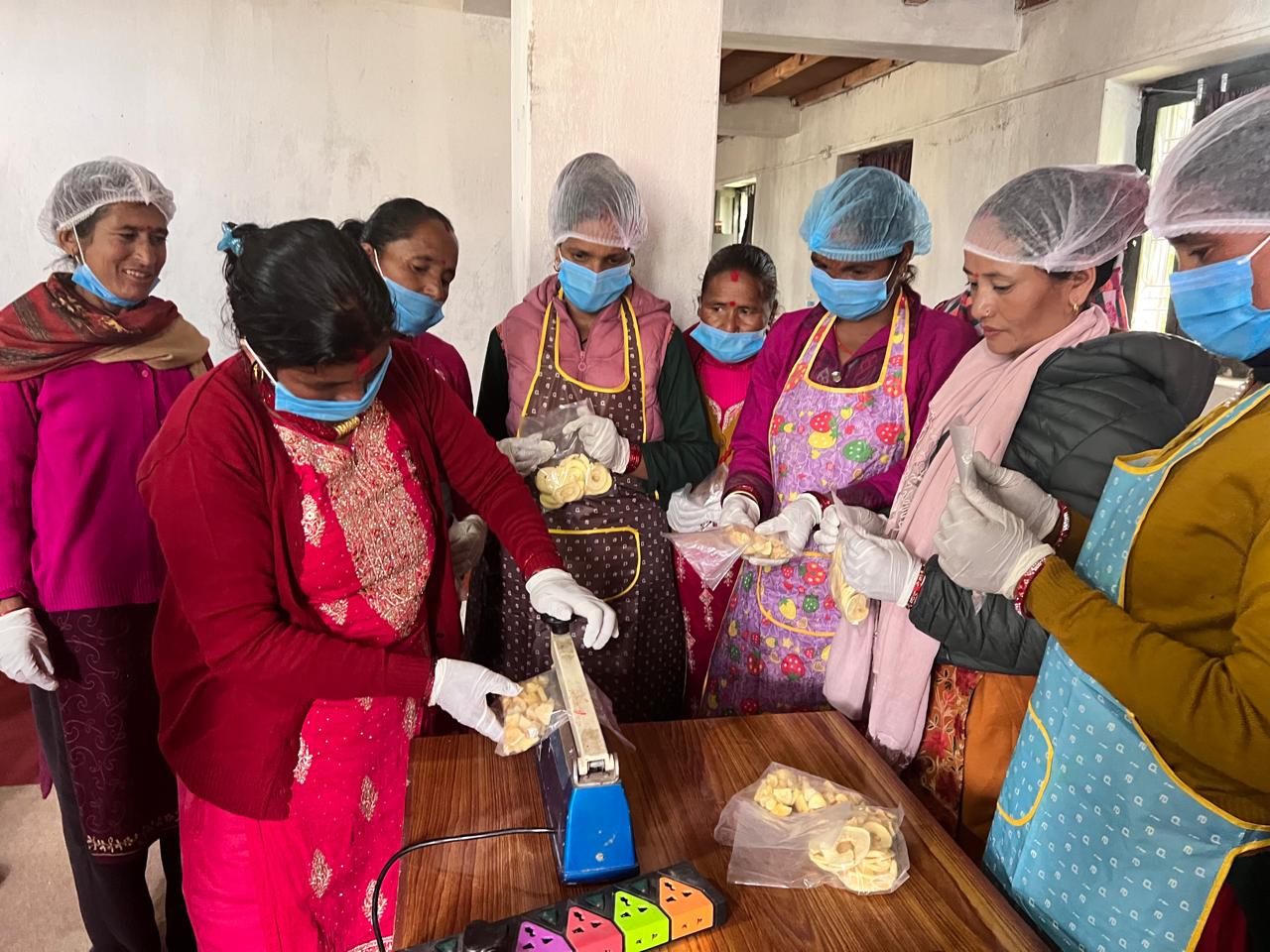
LI-BIRD organized a 2-day Training on Apple Processing and Product Diversification under the Green Evolution Project with financial support from Welthungerhilfe (WHH) Nepal and Federal Ministry of Economic Corporation and Development (BMZ), Germany from 22-23 September 2026 at FTQCDO-Jumla.
The training equipped 20 farmers and entrepreneurs from Tatopani Rural Municipality, Jumla, providing a platform to strengthen their knowledge and practical skills in apple post-harvest management, processing, and product diversification. The training was facilitated by Mr. Subash Timilsina from Food Technology and Quality Control Division Office (FTQCDO), Jumla, who guided participants through both theoretical foundations and practical skills on post-harvest handling of apples, their processing and product diversification.
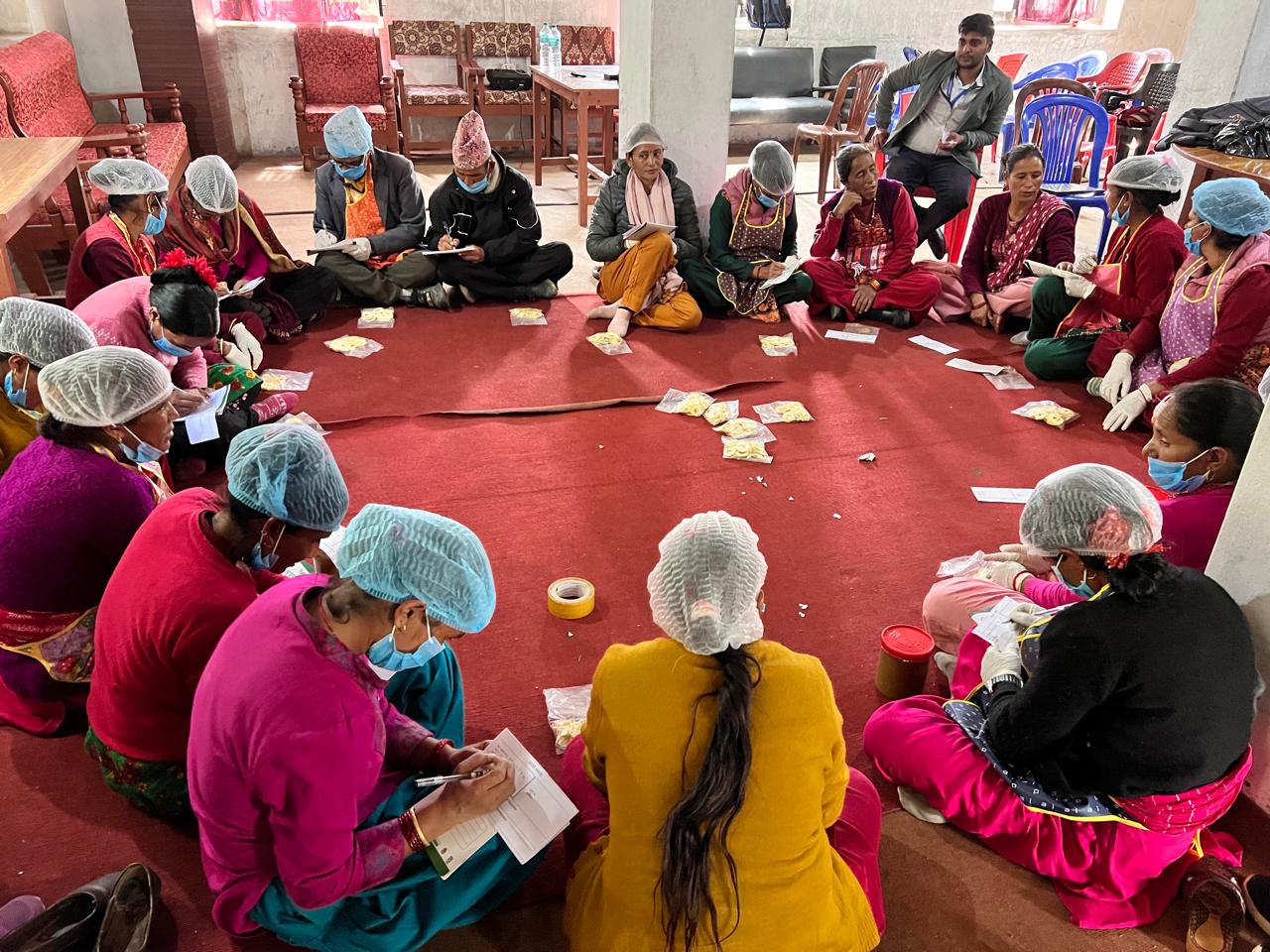
The primary objective of the training was to enhance farmers’ and entrepreneurs’ knowledge and practical skills on apple post-harvest processing and product diversification, with focus on utilizing lower-grade and surplus apples through appropriate processing and value addition. The training also highlighted opportunities for developing small-scale enterprises and reducing post-harvest losses.
The training specifically focused on:
- Apple post-harvest handling and management
- Apple processing techniques
- Product Diversification and value addition
- Utilization of low-grade and surplus apples
- Opportunities for small-scale enterprise development
- Reducing post-harvest losses and increasing the value of locally produced apples.
The training followed a participatory and practical learning approach, incorporating technical sessions, interactive discussions, demonstrations, and hands-on practical sessions. This approach enabled participants to connect the learning with practical applications in their own farming and enterprise activities. Through this training, the project aimed to support farmers and entrepreneurs in reducing post-harvest losses, adding value to locally produced apples, and exploring opportunities for enterprise development and stronger linages with local markets.