
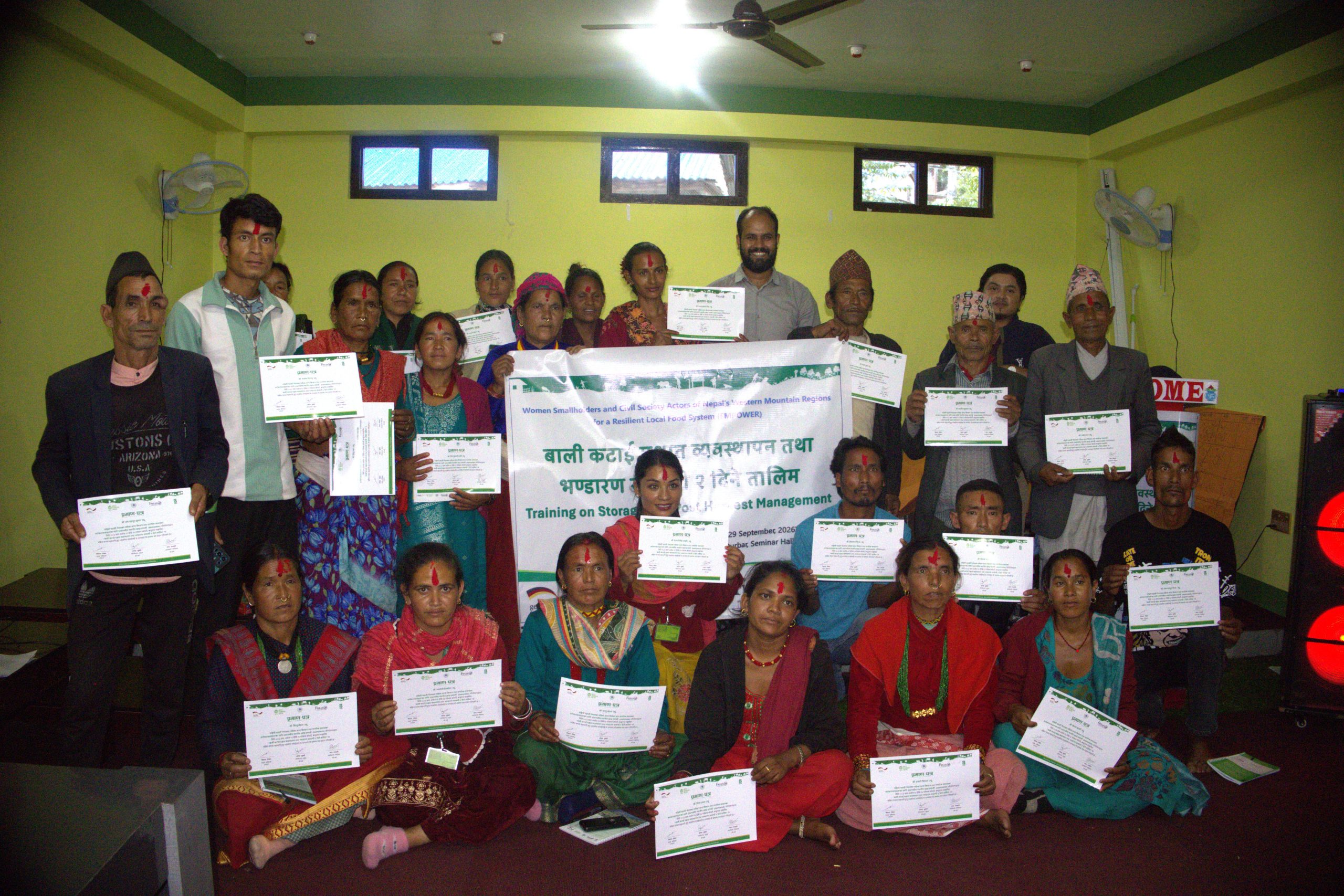
LI-BIRD successfully completed a two-day practical training on Storage and Post-Harvest Management on 28–29 September 2026 in Kolti, Budhinanda Municipality–2, Bajura, under the EMPOWER Project, reaching 20 farmers (14 female and 6 male) from Budhinanda, Bajura and Khatyad, Mugu.
The training followed a competency-based and experiential learning approach, combining technical inputs, practical exercises, group problem-solving, and farmer experience sharing. Participants strengthened their understanding of the post-harvest management continuum, from harvest handling, cleaning, sorting and grading to drying, moisture management, storage, processing, packaging and market-oriented handling.
Practical group exercises focused on local bean, millet, foxtail millet, turmeric, pepper, potato, onion, garlic, Turnip (Choto) and Stinging nettle enabling farmers to examine commodity-specific handling and storage requirements alongside production costs, returns, profitability and potential value-addition options such as potato chips. The training also documented farmers’ existing local storage and post-harvest practices and explored women-friendly technologies based on labor-saving potential, safety, ergonomic suitability, affordability and maintainability.
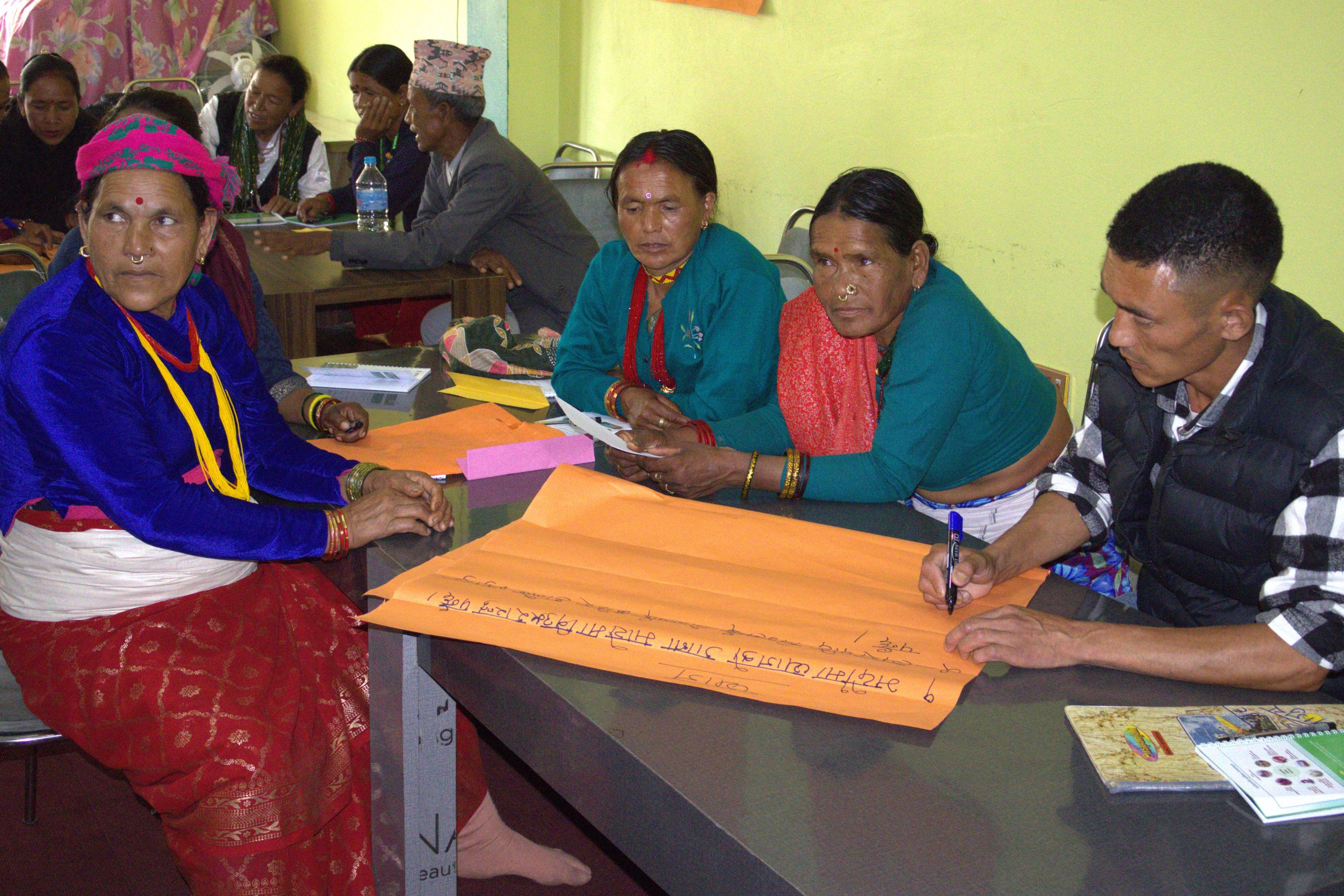
The learning complements ongoing FFS, producer-group and farmer-led learning, with trained participants encouraged to share practical knowledge within their groups and communities. The identified post-harvest constraints and technology needs will also provide practical evidence for future demonstrations of women-friendly processing, drying, storage and packaging technologies.
By strengthening practical post-harvest skills and farmer-led decision-making, the training aimed to reduce avoidable losses, maintain quality and shelf life, improve market readiness, and strengthen resilient and inclusive local food systems in the western mountain regions.
Organised by LI-BIRD under the EMPOWER Project, in partnership with FWEAN and KCDC Mugu, with financial and technical support from WHH Nepal and BMZ Germany.