
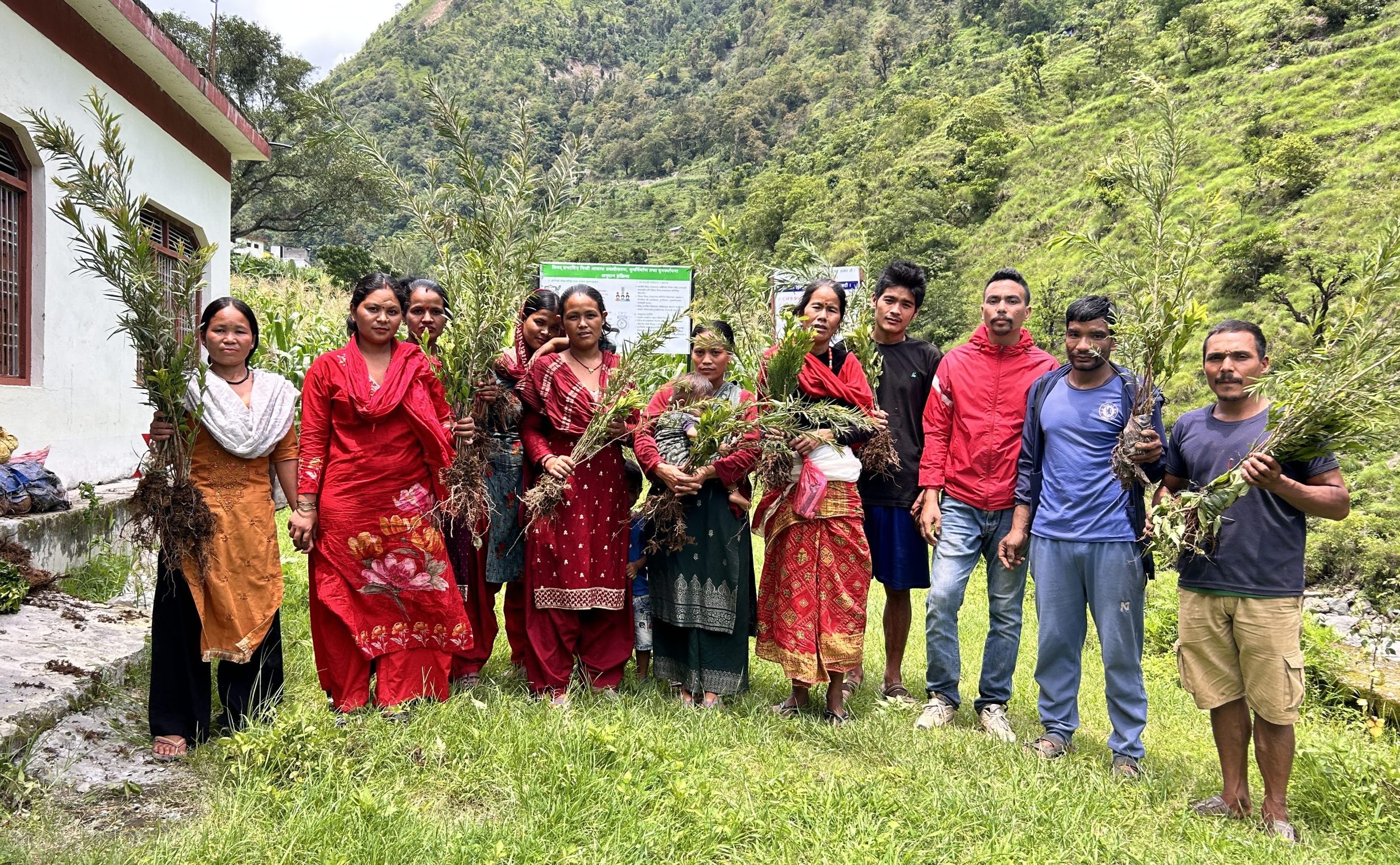
From blooming landscapes to stronger bee populations, positive change is taking shape. LI-BIRD recently distributed 1,183 pollinator-friendly saplings, including litchi, bottle brush, mango, mandarin orange, butter tree, java plum, jacaranda, and night-jasmine, to 126 farmers in Tanahun, Jajarkot, Dailekh, and Palpa under the Nepal Pollination Project (NPP).
Recognizing the critical role of diverse flowering plants in sustaining pollinator populations, the project has been supporting beekeeping farmers and community forest user groups by distributing 1183 floral resources that are rich in nectar and pollen to 126 farmers. Recently, in Narayan and Thatikadh Municipalities, local farmers were supported with 250 saplings of Bottle Brush (Kalki), 50 Butter Tree (Chiuri), 100 Jacaranda (Birendra Phool), 50 Night-Jasmine (Parijat), and 100 Java plum (Jamun), all of which are known for their ecological value and importance as pollinator-friendly plants. In Bhanu Municipality-9, Tanahun, 208 saplings consisting of 130 Bottle Brush, 52 Litchi, and 26 Mango plants were distributed to 26 members of the Cerana Beekeeping Group. These species were selected for their potential to provide valuable floral resources for honeybees and other pollinators throughout different seasons.
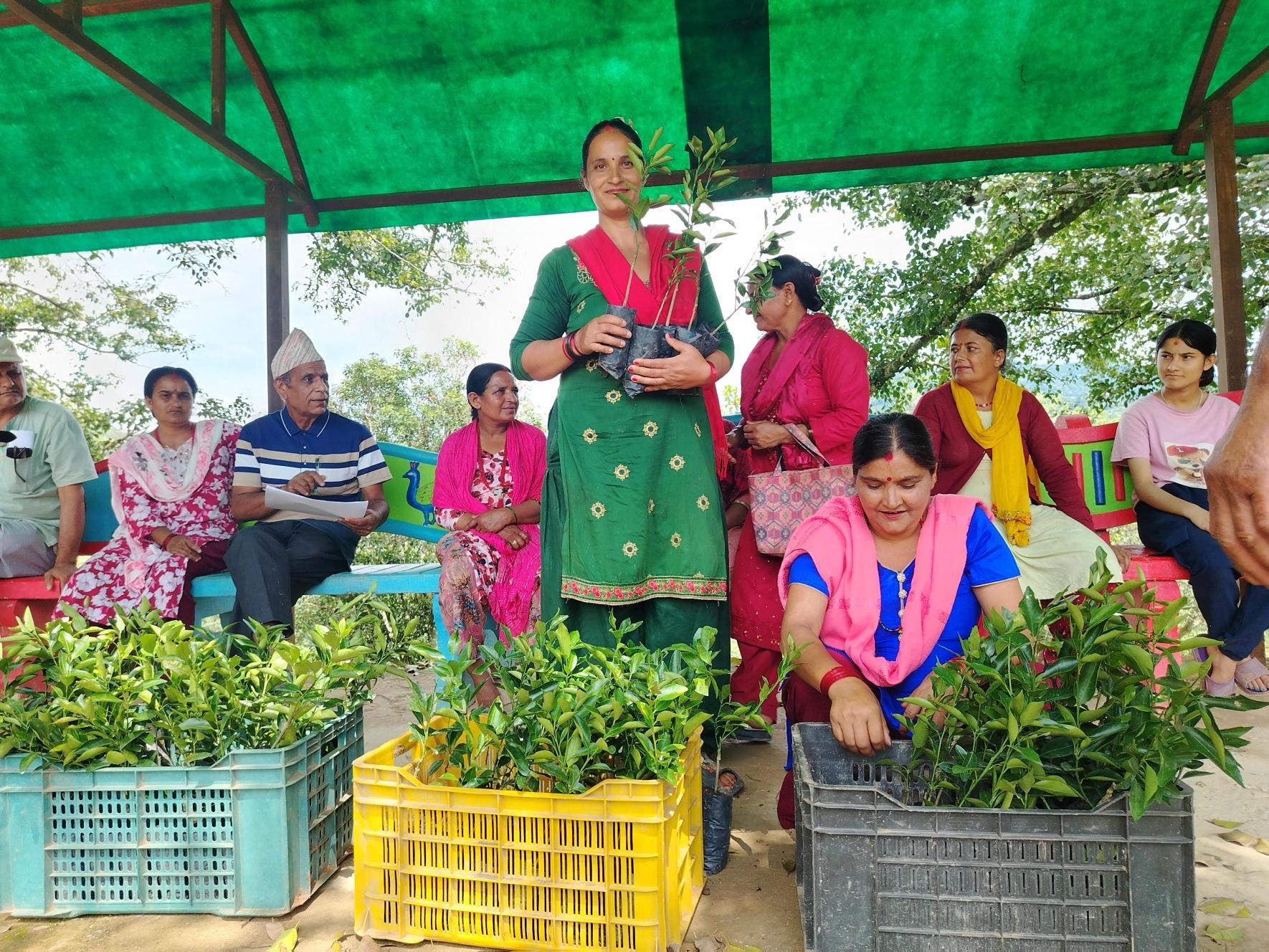
Likewise, in Nalgad Municipality Wards 1 and 3 of Jajarkot, 25 beekeepers received 150 Bottle Brush saplings and 150 Mandarin Orange saplings to promote pollinator-friendly landscapes and enhance forage availability. Similarly, in Palpa, 125 saplings of the Mandarin Orange (Khoku variety) were distributed among 25 farmers, with each beneficiary receiving five saplings.
Alongside the distribution program, project staff conducted practical demonstrations on proper plantation and management practices to ensure the successful establishment and long-term survival of the saplings. Through these activities, the Project aims to increase year-round floral resources for pollinators, support healthy bee populations, improve ecosystem services, and contribute to biodiversity conservation. The project hopes that these plantations will create sustainable floral sources for pollinators while strengthening rural livelihoods and promoting pollinator-friendly agricultural landscapes across Nepal.
The Nepal Pollination Project is supported by the Darwin Initiative and the University of Bristol, and implemented through a consortium of LI-BIRD, HERD International, Agriculture and Forestry University (AFU), and Tribhuvan University (TU) across various provinces of Nepal. A series of plantation support activities have been carried out to enhance forage availability for pollinators and strengthen sustainable beekeeping practices.