
Description
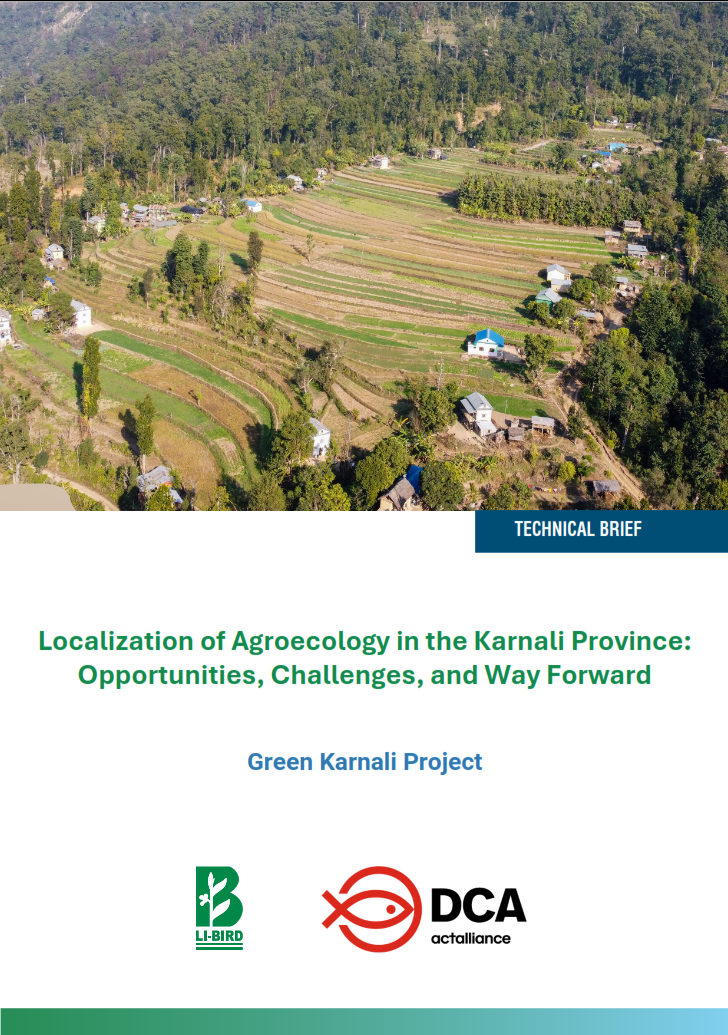
Karnali Province faces significant agricultural and food system challenges, including fragile mountain ecosystems, predominantly rainfed farming systems, persistent poverty and food insecurity, youth outmigration, and increasing climate variability. Conventional input-intensive agricultural models are often poorly suited to these conditions. At the same time, Karnali’s farming systems are deeply rooted in mixed crop–livestock–forest integration, indigenous crops, rich agrobiodiversity, and strong local knowledge traditions, characteristics that closely align with agroecological principles.
Globally, agroecology is increasingly recognized as a practical framework for transforming food systems while strengthening climate resilience, biodiversity conservation, and rural livelihoods. Karnali already possesses important foundations for advancing agroecology, including the Organic Karnali vision, indigenous crop promotion programmes, Participatory Guarantee Systems, territorial branding initiatives such as the “Mulyawan” label, and municipal Agroecological Plans. However, these initiatives remain fragmented across projects and sectoral programmes. Localizing agroecology, embedding agroecological principles within provincial policies, municipal planning processes, extension systems, and market mechanisms, offers a pathway for scaling these efforts into a coherent territorial development approach.