
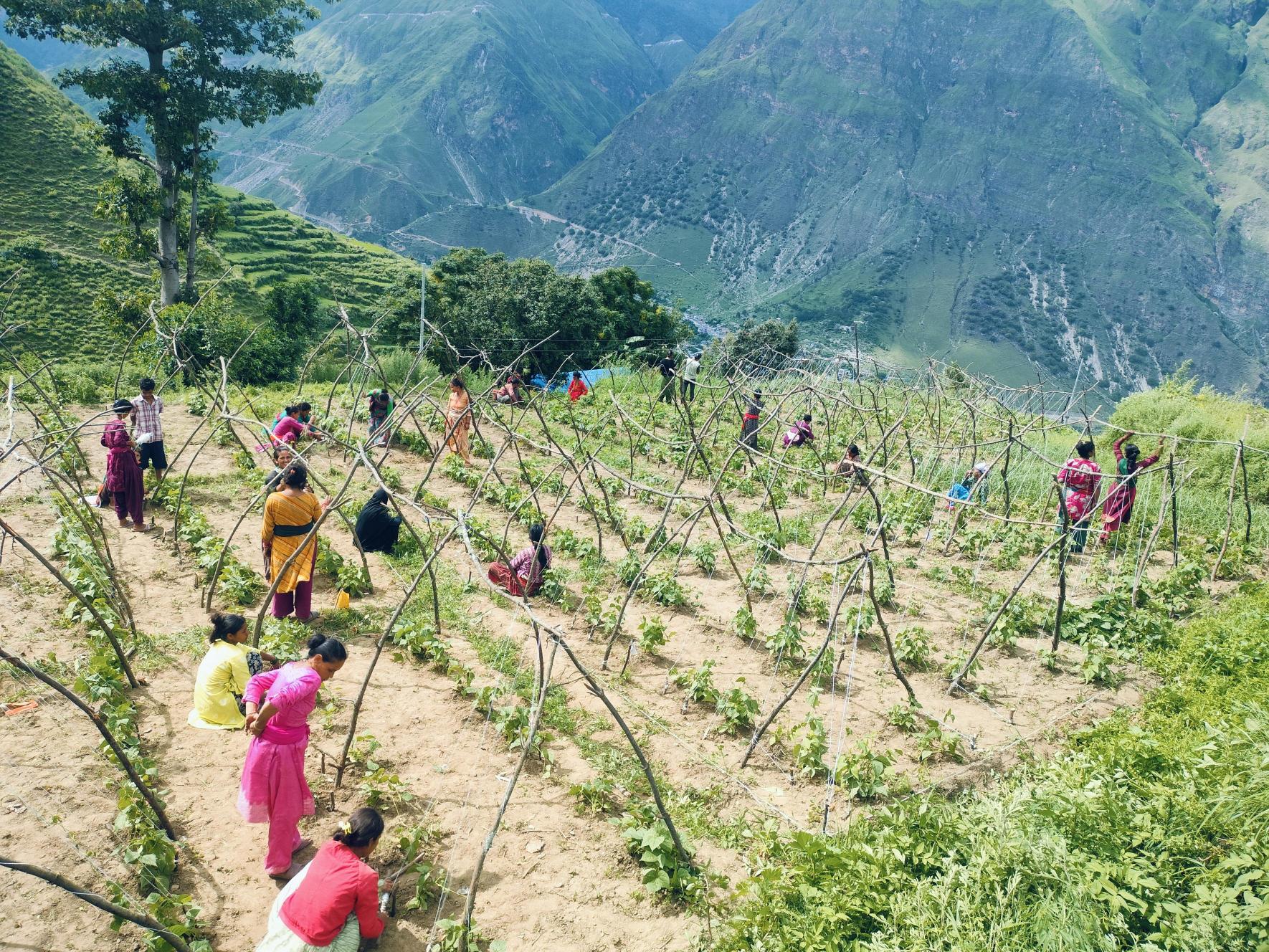
“Now, Farmers are not just growing crops; they’re deciding what grows next!”
This monsoon, LI-BIRD under the EMPOWER Project conducted conducted Farmers Field Schools (FFS) on Participatory Plant Breeding (PPB), actively engaging 52 farmers (15 Male and 37 Female) in the selection and improvement of crop varieties that best meet their local needs and preferences. By placing farmers at the centre of the research and decision-making process, the initiative promotes locally adapted, climate-resilient, and farmer-preferred crop varieties while strengthening community knowledge and innovation.
In Budhinanda Municipality-6, Kotila of Bajura District, participating farmers with knowledge and technical expertise from our facilitators are evaluating eight bean varieties based on key traits such as yield potential, taste, early maturity, and tolerance to pests and diseases. Through regular field observations, discussion, and hands-on experimentation, farmers are identifying varieties that perform best under local agroecological conditions.
Similarly, in Budhinanda Municipality-9, Kandha, farmers are collaboratively assessing local Choto (Gante Mula) through a process of Participatory Variety Enhancement (PVE). Using seed materials collected from ten local farmers, the initiative brings community members together to compare, conserve, and enhance local genetic resources while preserving valuable indigenous knowledge.
To date, 20 FFS sessions have been completed, providing farmers with opportunities to observe crop performance, exchange experiences, strengthen technical skills, and combine their traditional knowledge with scientific approaches. This participatory learning process enables farmers to identify and select the crop materials most suitable for their environments, thereby contributing to improved productivity, resilience, and food security.
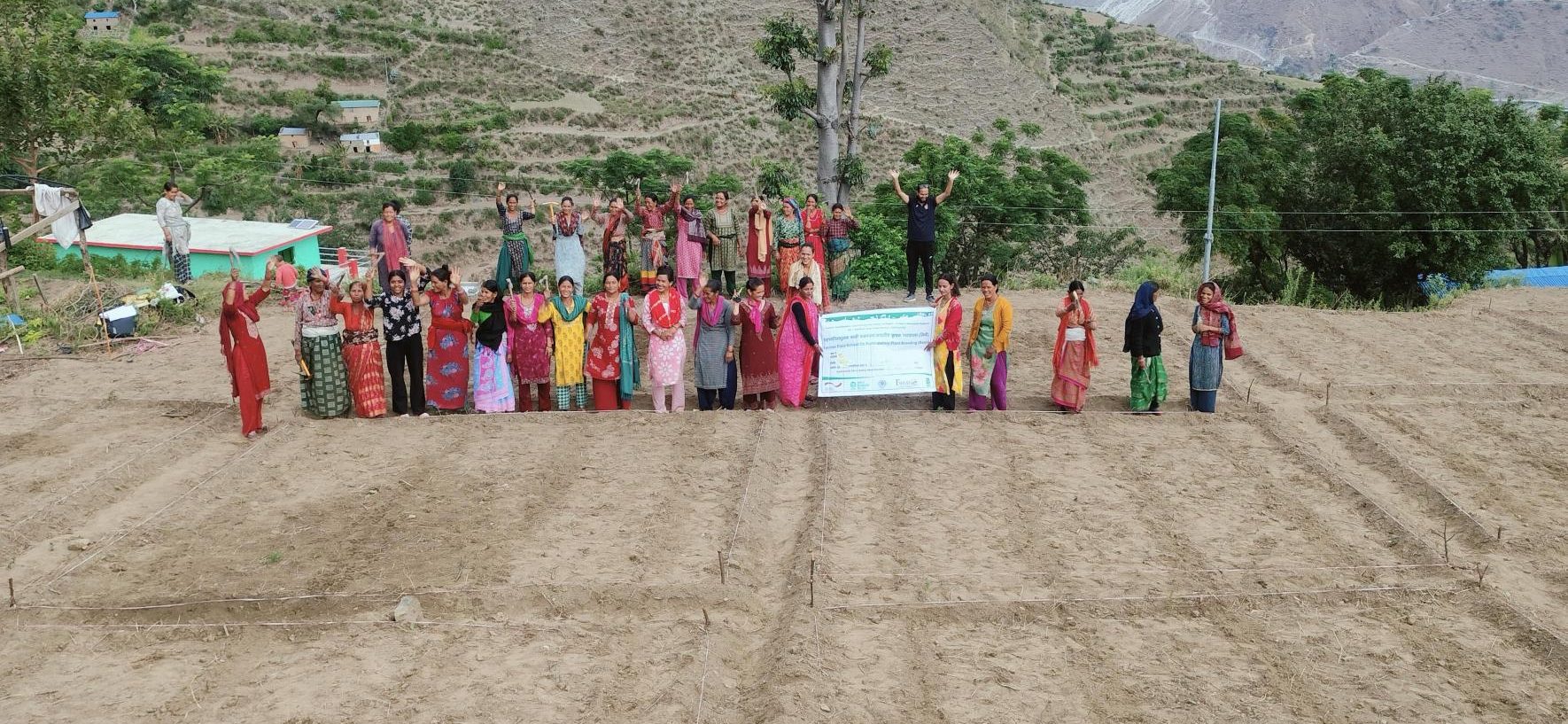
LI-BIRD, in collaboration with the Federation of Women Entrepreneurs’ Associations of Nepal (FWEAN) and KCDC Mugu, is implementing the EMPOWER project with technical support from WHH Nepal (Welthungerhilfe) and financial support from the German Federal Ministry for Economic Cooperation and Development (BMZ) in Budhinanda Municipality of Bajura District and Khatyad Rural Municipality of Mugu District, Nepal. The project aims to empower women smallholders, marginalized communities, and civil society actors to strengthen resilient local food systems. By promoting agroecology-based farming practices, EMPOWER supports women farmers and youth in adopting sustainable, climate-resilient agricultural approaches that enhance productivity while conserving natural resources.