
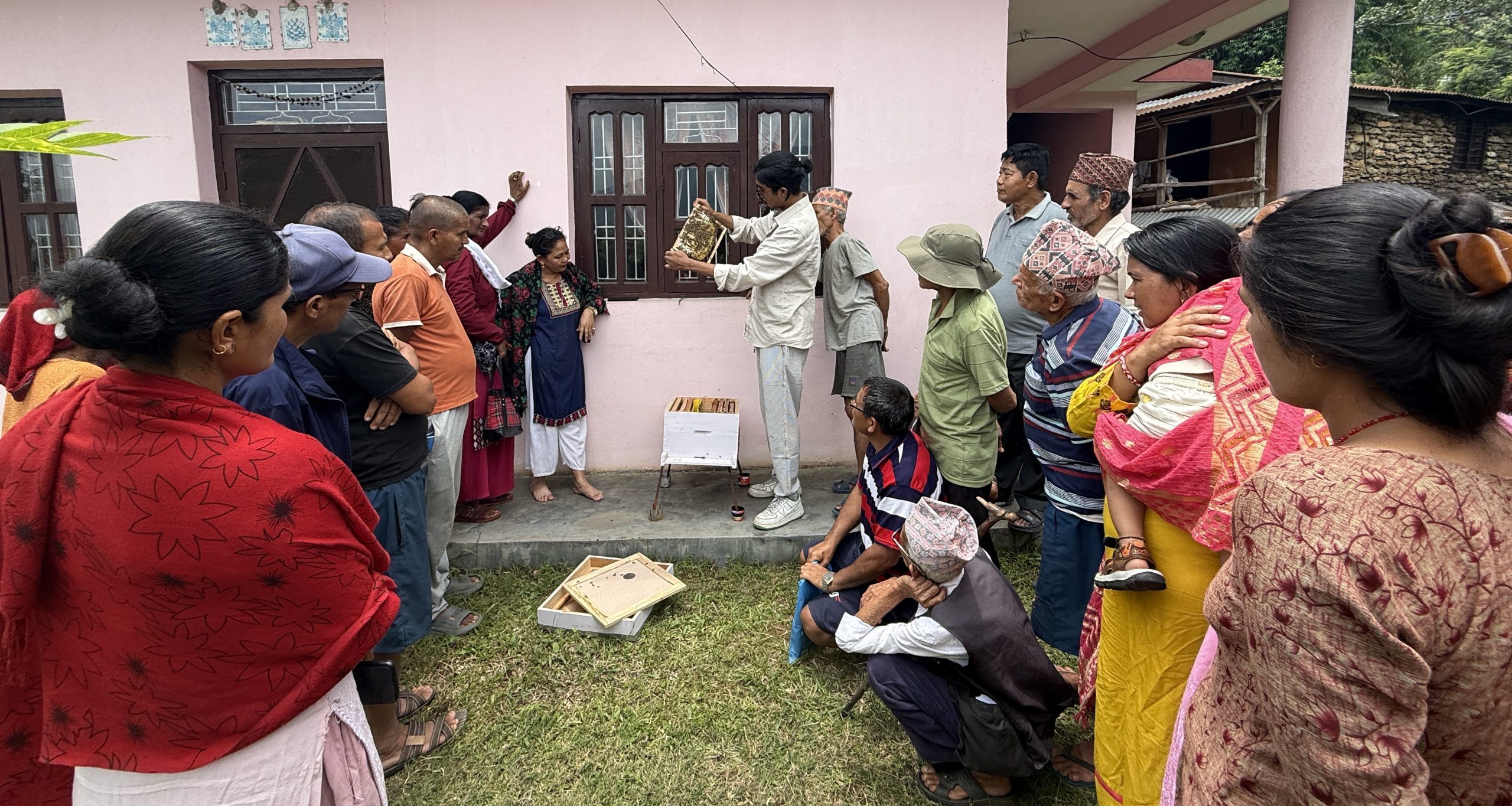
With financial support from the UK Government’s Darwin Initiative, “Upscaling Pollination to Enhance Biodiversity and Human Welfare in Nepal”, referred as the Nepal Pollination Project (NPP), has been supporting a series of farmer-level basic beekeeping trainings across Nepal.
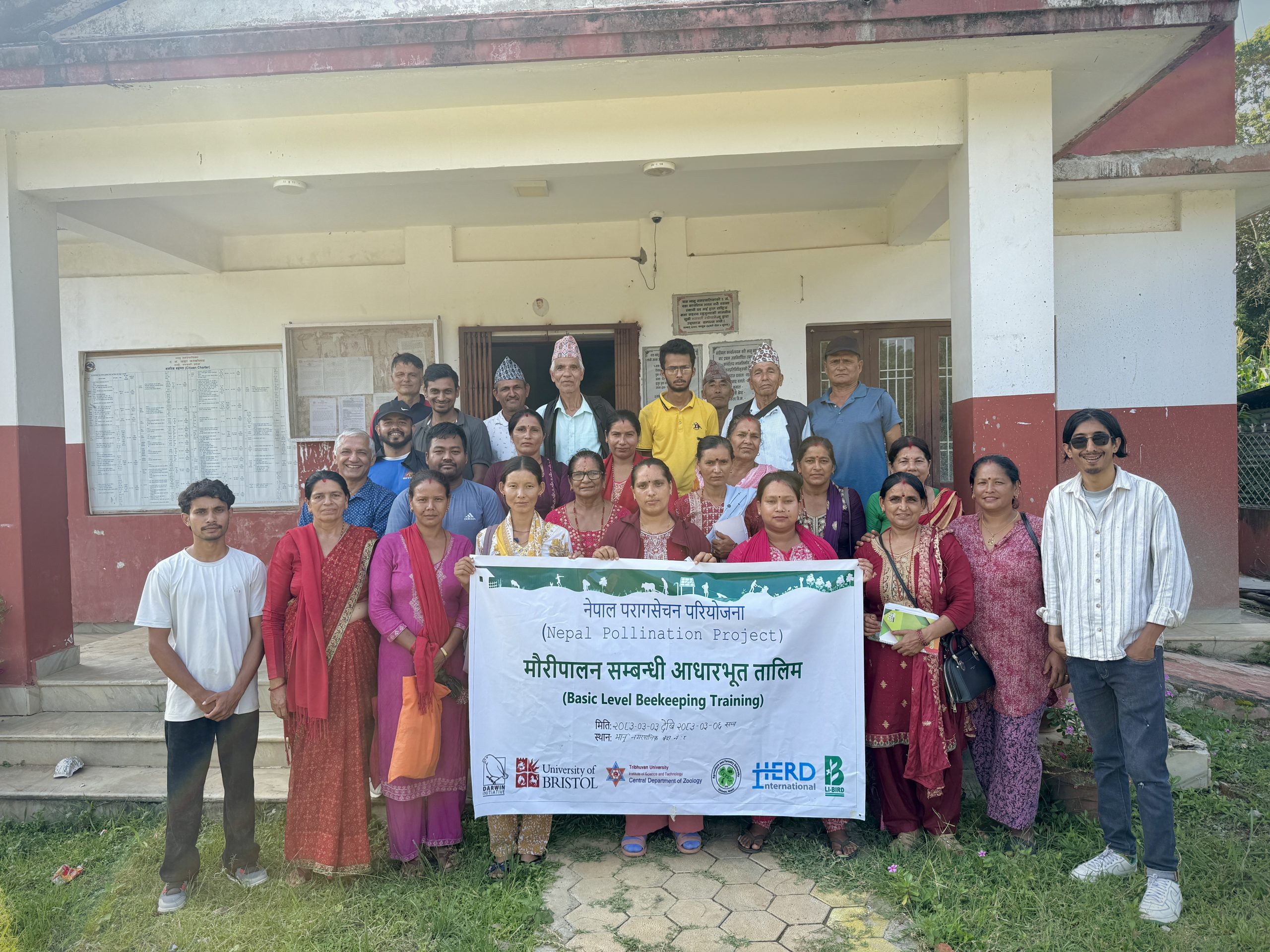
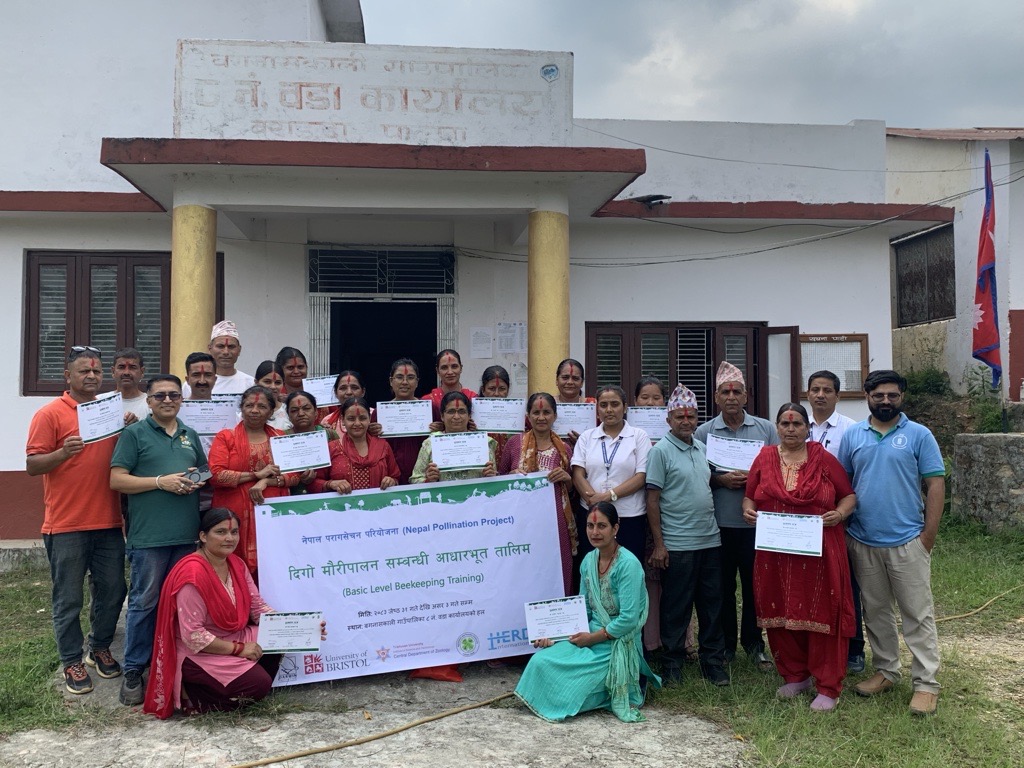
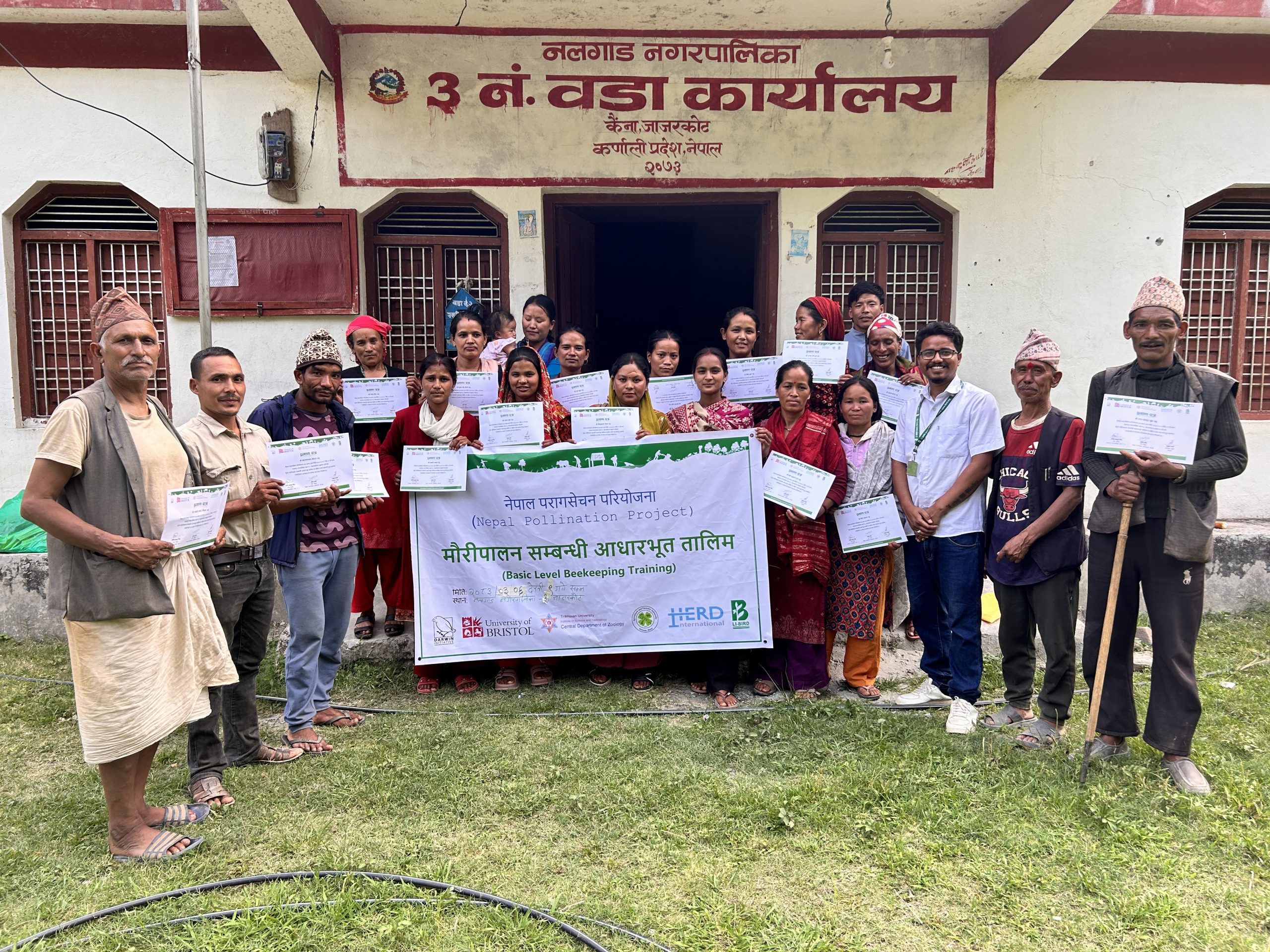
As part of this project, Local Initiatives for Biodiversity, Research and Development (LI-BIRD) organized four-day basic beekeeping trainings aimed at strengthening sustainable beekeeping practices and enterprise development across:
- Lumbini Province: Baganaskali Rural Municipality, Palpa
- Gandaki Province: Bhanu Municipality, Tanahun; Marsyangdi Rural Municipality, Lamjung
- Karnali Province: Narayan Municipality & Thatikandh Rural Municipality (Dailekh); Nalgad & Bheri Municipalities (Jajarkot)
Each training included 20–30 smallholder beekeepers managing (2–10 hives) from local communities. So far, a total of four trainings have been concluded. The project aims to reach approximately 175 farmers by 2026, and to date, around 110 farmers have already benefited from the program.
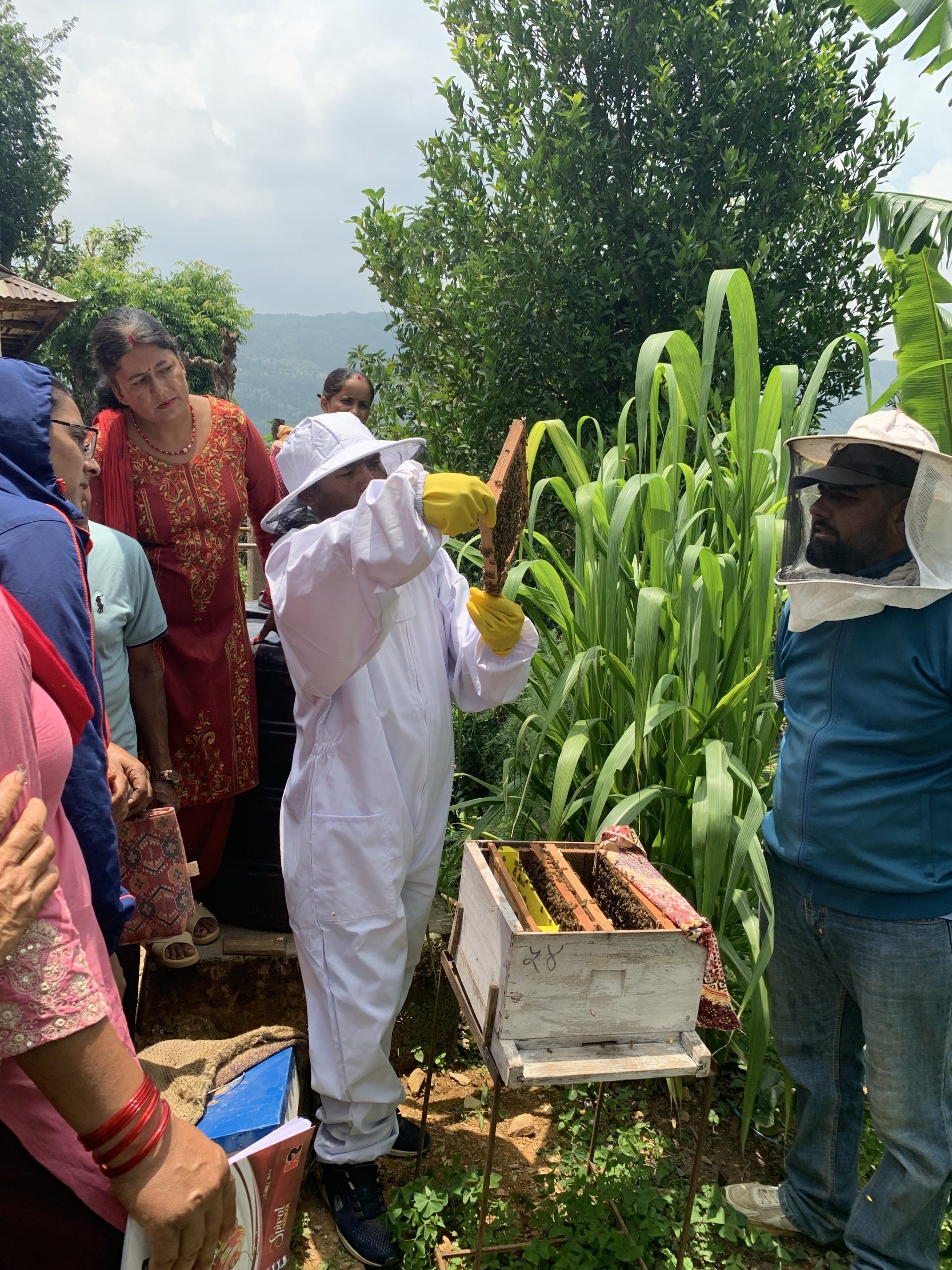 | 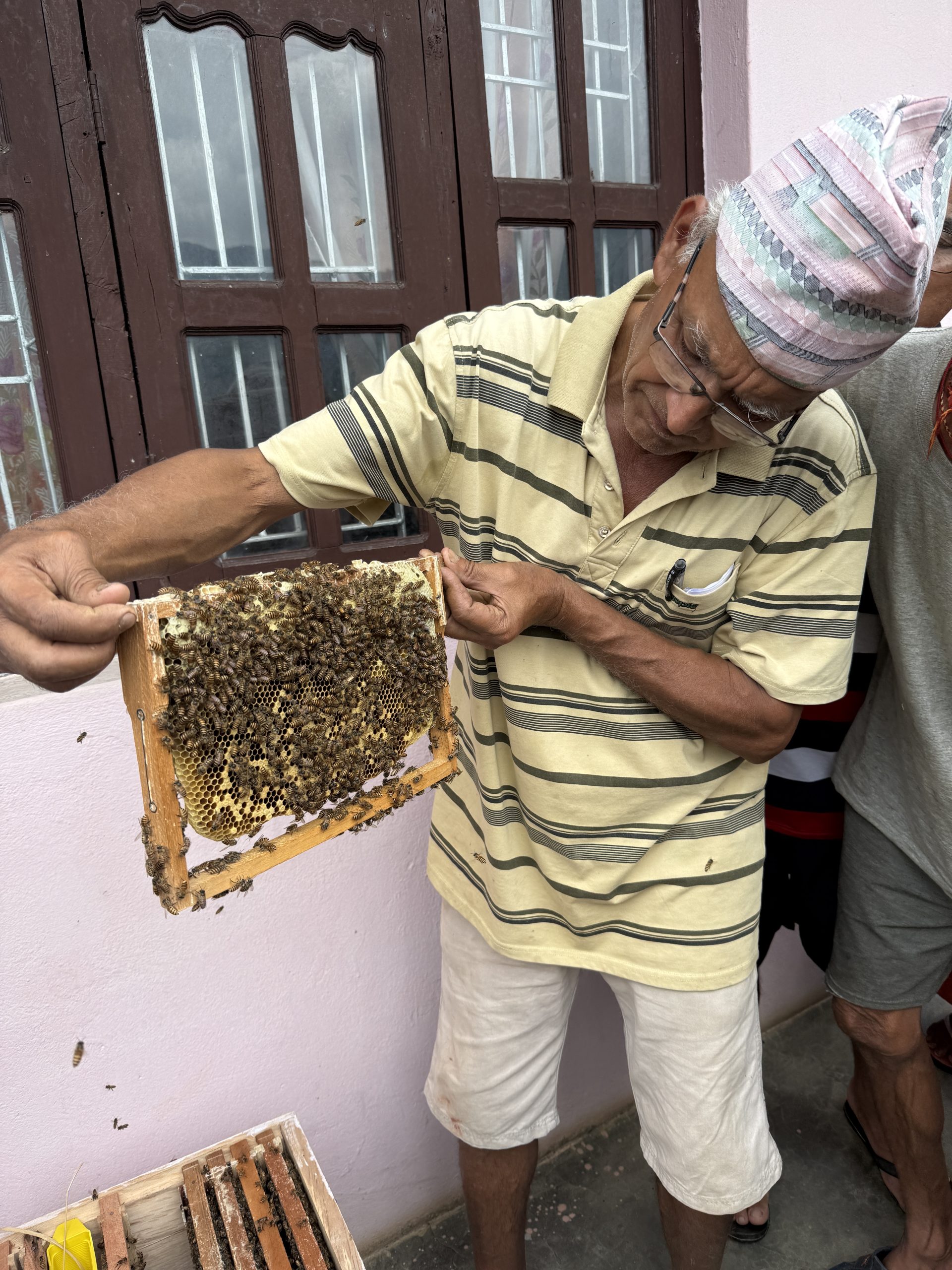 | 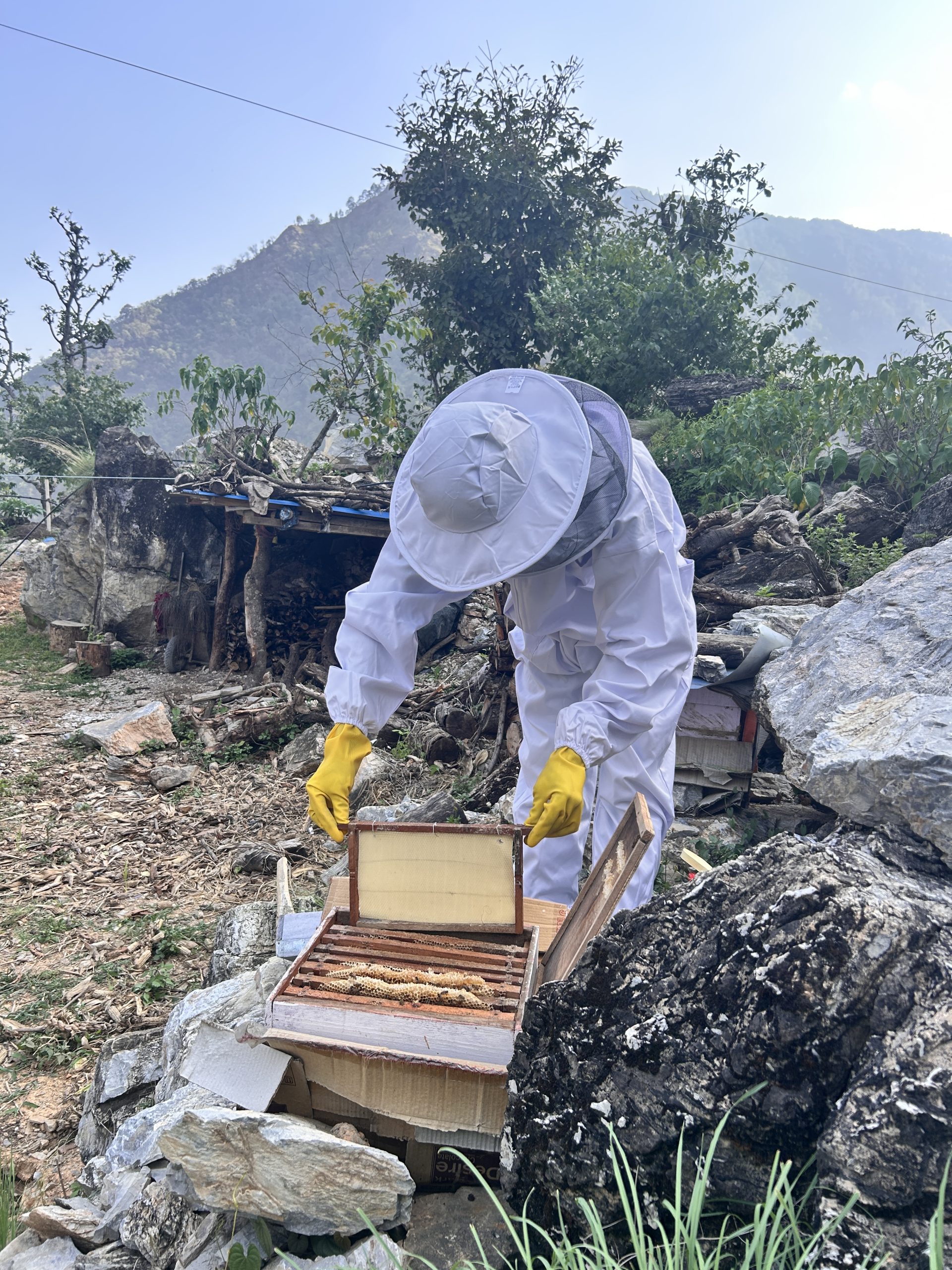 |
The programme includes both theoretical and practical components, covering:
- Importance, opportunities, and challenges of beekeeping
- Honeybee life cycle, behaviour and work division
- Hive inspection and seasonal hive management practices
- Types and application of artificial feed
- Management of bee swarming and absconding
- Identification and control of pests, diseases, and predators
- Field-based learning through farm monitoring and practical exercises
The four-year project (starting October 2025 is supported by the UK government’s Darwin Initiative and led by the University of Bristol, UK, and jointly implemented in Nepal by consortium partners including LI-BIRD, HERD International, the Agriculture and Forestry University (AFU), and Tribhuvan University (TU). The Project aims to enhance pollinator conservation and management across the Himalayan region, contributing to improved biodiversity, increased agricultural productivity, and enhanced livelihoods of farmers.
Through initiatives like these trainings, NPP is driving a national shift toward good beekeeping practices, better pollinator awareness, research, and conservation, building more resilient ecosystems and communities.
 |  |  |