
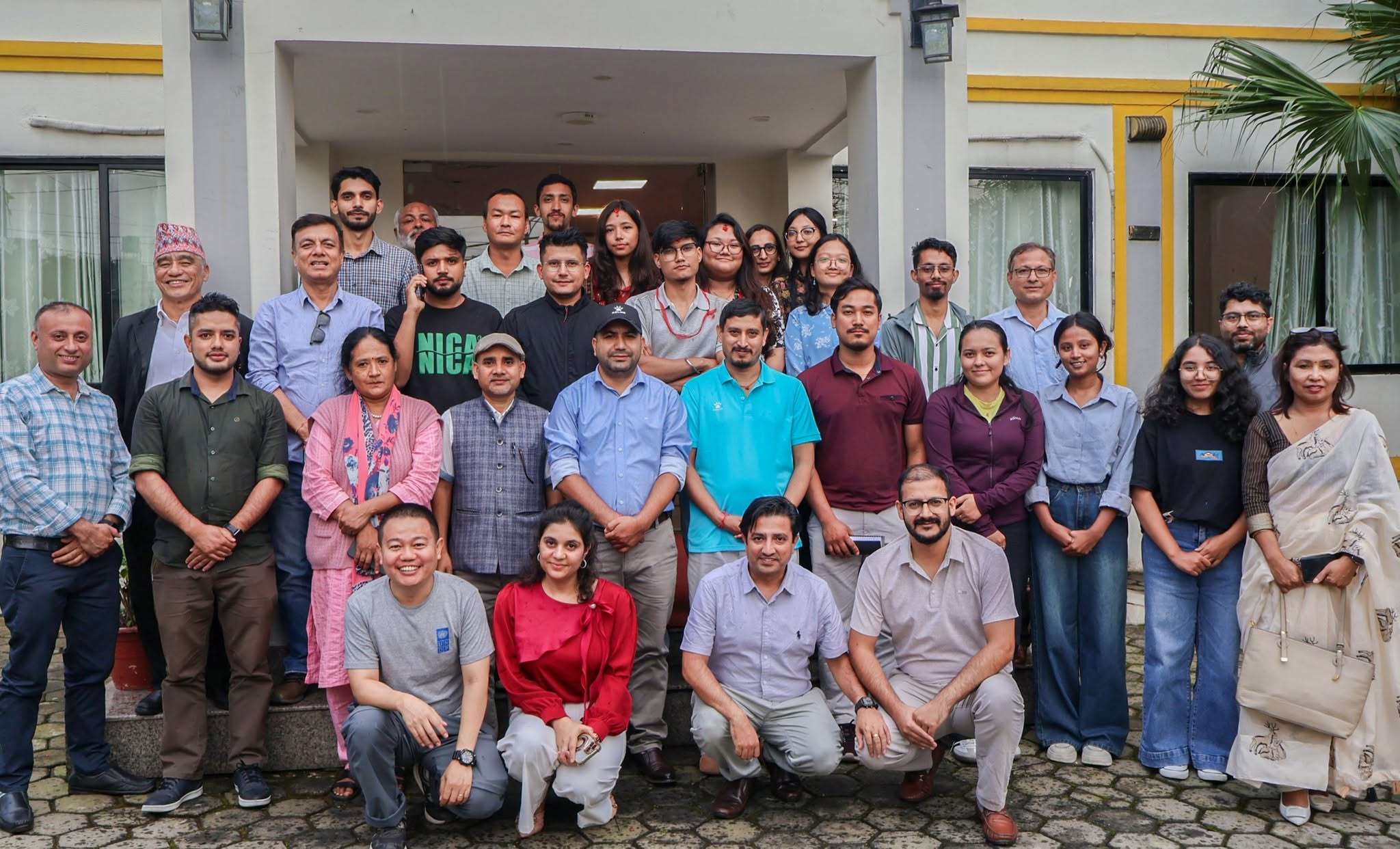
On 6 October, 2026, LI-BIRD organised its inception Pollinator Network workshop under the Nepal Pollinator Project in Lalitpur. The project is funded by the Darwin Initiative, with technical support from the University of Bristol, and in collaboration with HERD International, Tribhuvan University, and Agriculture and Forestry University.
The workshop welcomed over 31 pollinator conservation enthusiasts representing NGOs, associations, academia, and more. Participants discussed the status of pollinators in Nepal, key pollinator groups, threats, and research gaps. They also heard about the Darwin Initiative’s work and the progress of the Himalayan Pollinator Patrol.
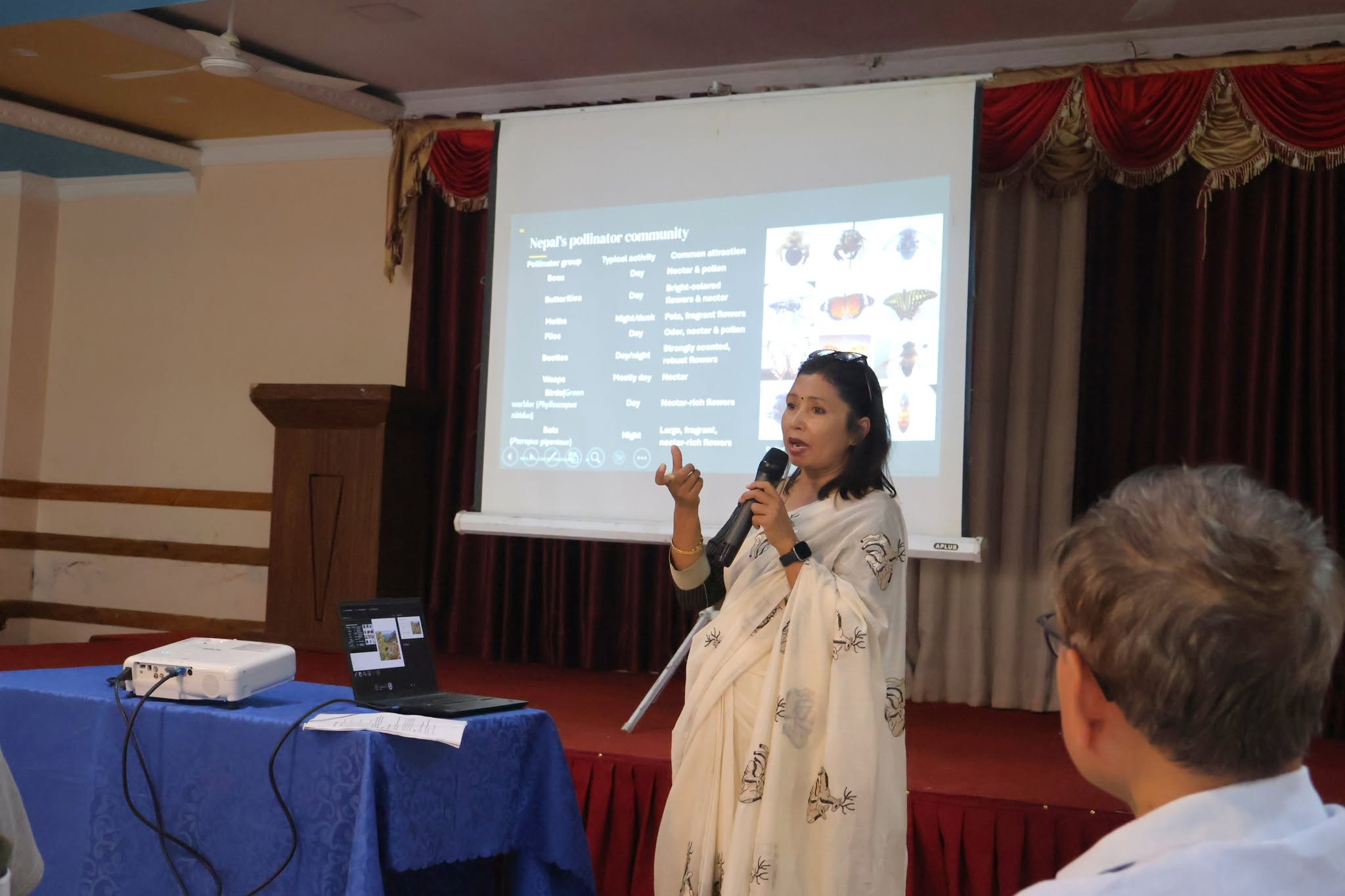
Dr. Urmila Dyola, Head of the Zoology Department, Patan Multiple Campus, presented on pollinator conservation in Nepal, covering the status, key pollinator groups, threats, research gaps, and conservation needs. Mr. Sujan Sapkota, from HERD International, shared the journey of the Darwin Initiative’s first and second phases of the Pollination Project, followed by the Himalayan Pollinator Patrol (Nature Conservation and Study Centre)’s presentation on progress and key achievements in documentation and conservation through networking. Mr. Hridesh Sharma introduced the need and purpose of a National Pollinator Network, highlighting potential opportunities and discussing a possible framework for its structure, coordination, knowledge sharing, policy advocacy, and sustainability. Dr. Daya Ram Bhusal, Professor, Department of Zoology, Tribhuvan University, highlighted, “As pollinators face the pressures of a changing climate, our collective network will be vital in protecting them.” In an open discussion, participants envisioned a National Pollinator Network as a flexible, loosely structured and inclusive platform open to both individuals and organisations, connecting science, policy, and communities, with a focus on long-term collaboration and sustainability.
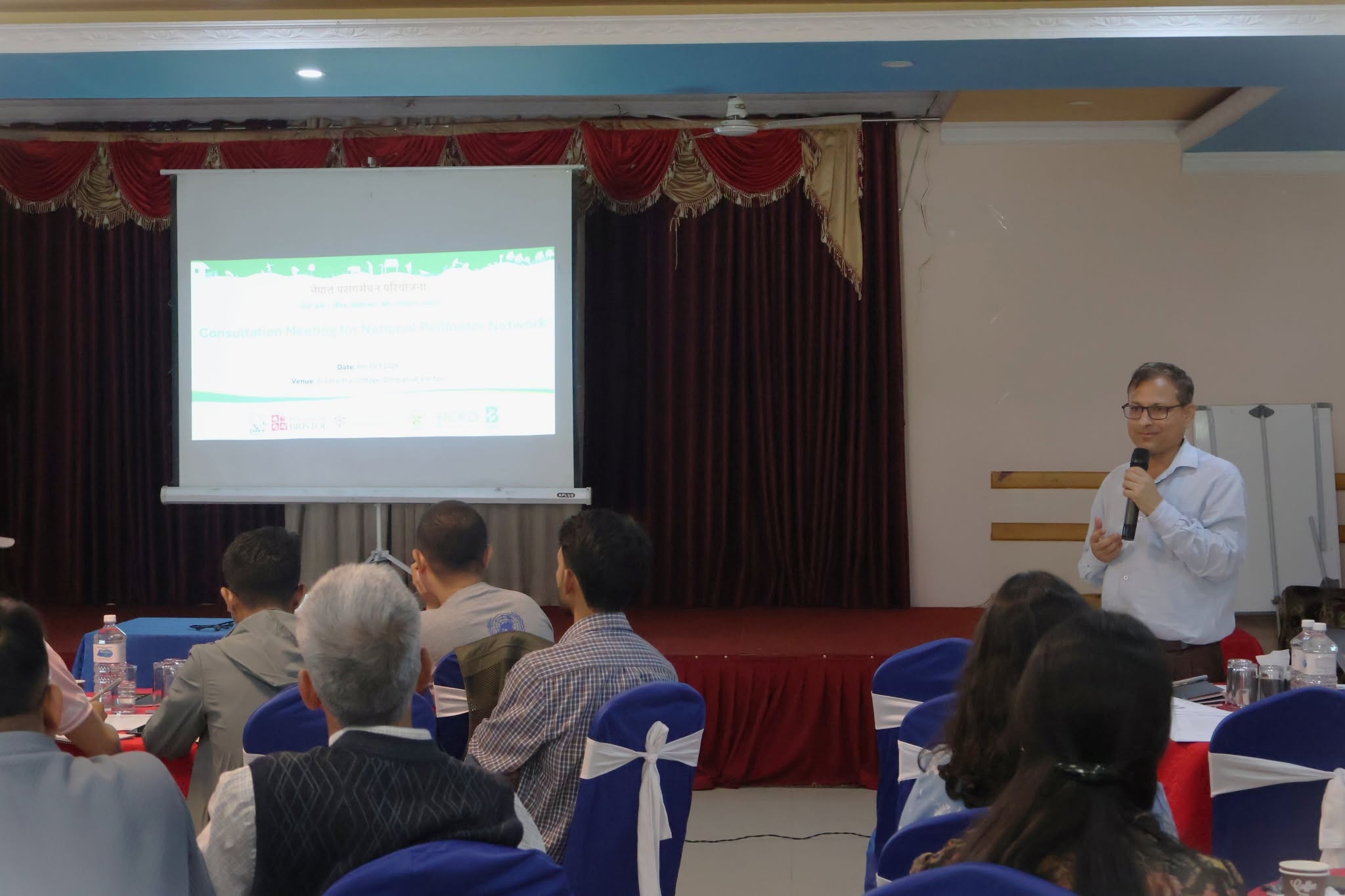
Executive Director of LI-BIRD, Mr. Bharat Bhandari, concluded the event, stating, “The network aims to be inclusive of all, starting with a small number of core team members who will identify key areas of engagement.” A small team will now take the work forward.
Together, we can protect the pollinators that sustain our food, forests, and livelihoods.