
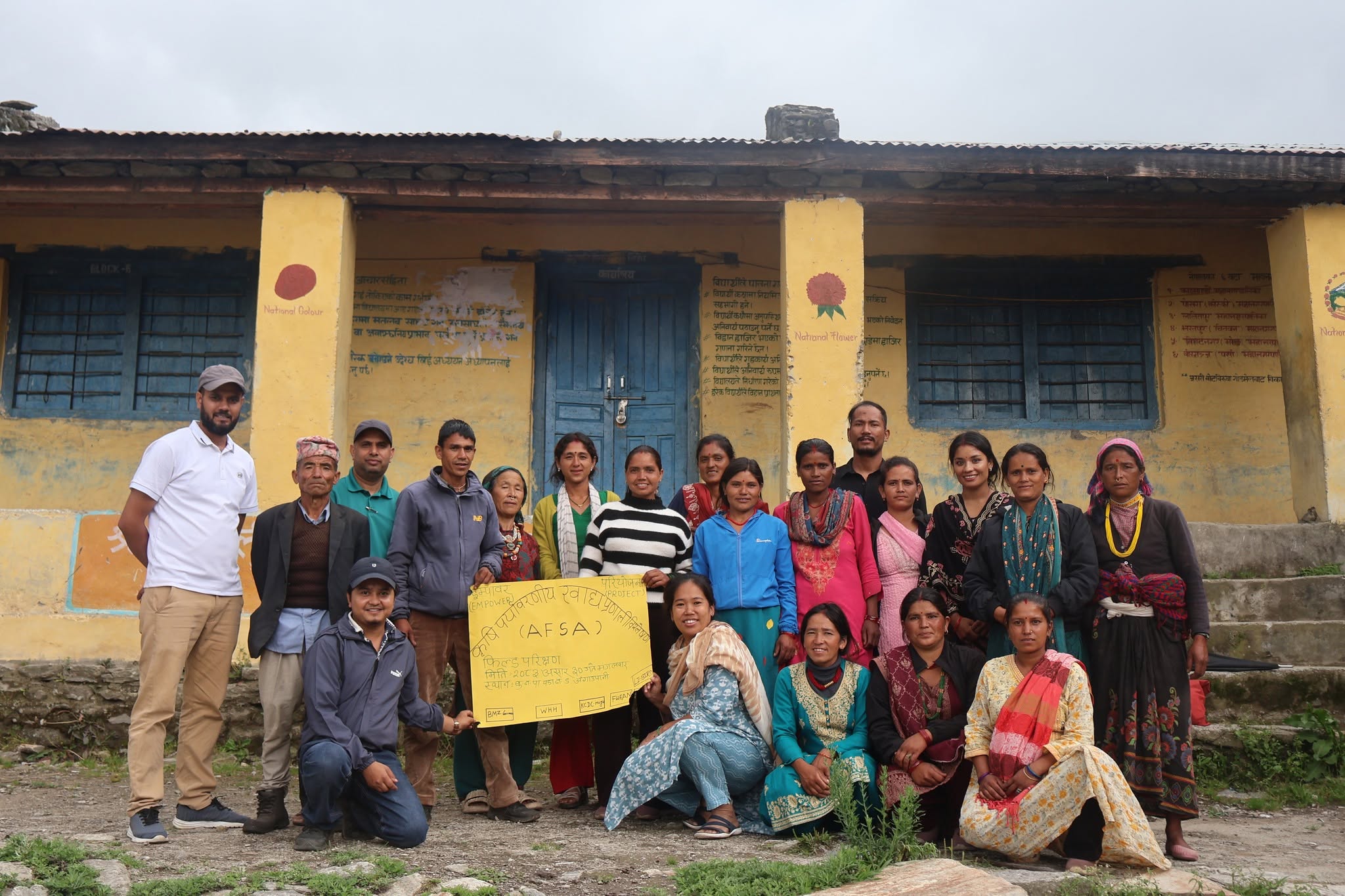
As part of the EMPOWER Project – Women Smallholders and Civil Society Actors of Nepal’s Western Mountain Regions for a Resilient Local Food System, LI-BIRD, in collaboration with FWEAN and KCDC, conducted a Participatory Agroecological Food System Assessment (field orientation) in Aganpani, Budhinanda Municipality-9, Bajura.
The assessment brought together 12 farmers, including women, youth, and members of marginalized communities, to assess the strengths, challenges, and opportunities within their local food system. Using participatory tools such as resource mapping, seasonal food calendar, livelihood shift mapping, four-cell crop diversity analysis, food chain tracking, agroecology performance scoring, causal loop and leverage point analysis, and visioning exercises, participants generated valuable local evidence to support future planning and interventions.
The findings indicate that the community’s agroecological performance is above average, demonstrating strong local resilience and sustainable farming practices. However, opportunities remain to strengthen economic diversification, soil and animal health, climate resilience, and market access.
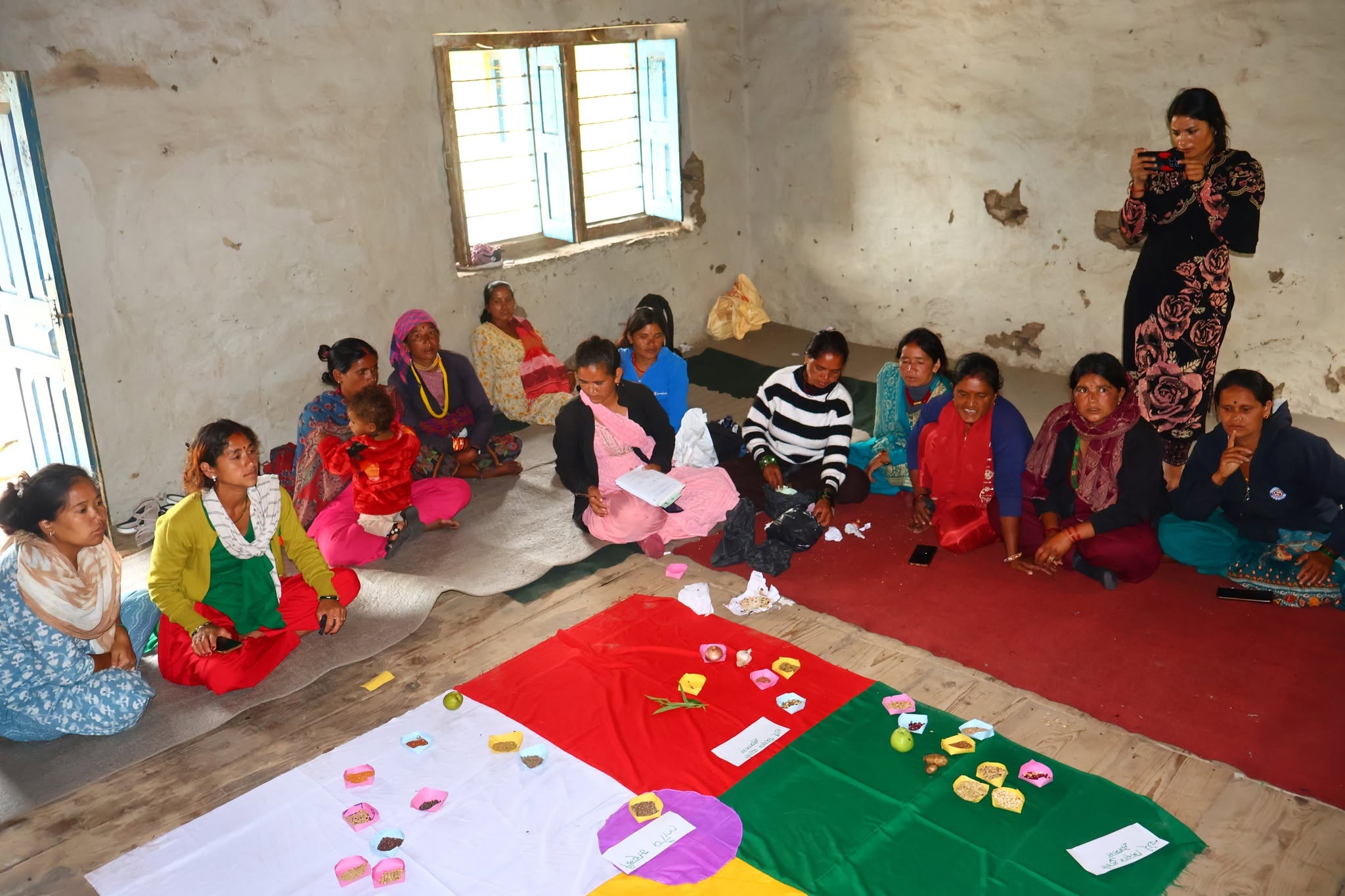
This assessment highlights a simple but powerful lesson: when communities actively participate, better evidence is generated for better decisions. Local knowledge and inclusive dialogue are key to building resilient, sustainable, and people-centred food systems.