
Apples are one of the most important sources of income for farmers in Jumla, with strong demand in urban markets across Nepal. However, in recent years, premature harvesting and poor post-harvest handling practices, driven largely by limited awareness and technical knowledge, have been hampering fruit quality and shelf life and have dented the reputation of Jumla apples among consumers.
To address this, the RERAS Project has collaborated with the Agriculture Development Office (ADO), Jumla, and local governments to promote timely harvest and exports, recommending that apples be harvested and exported only after the first week of Bhadra.
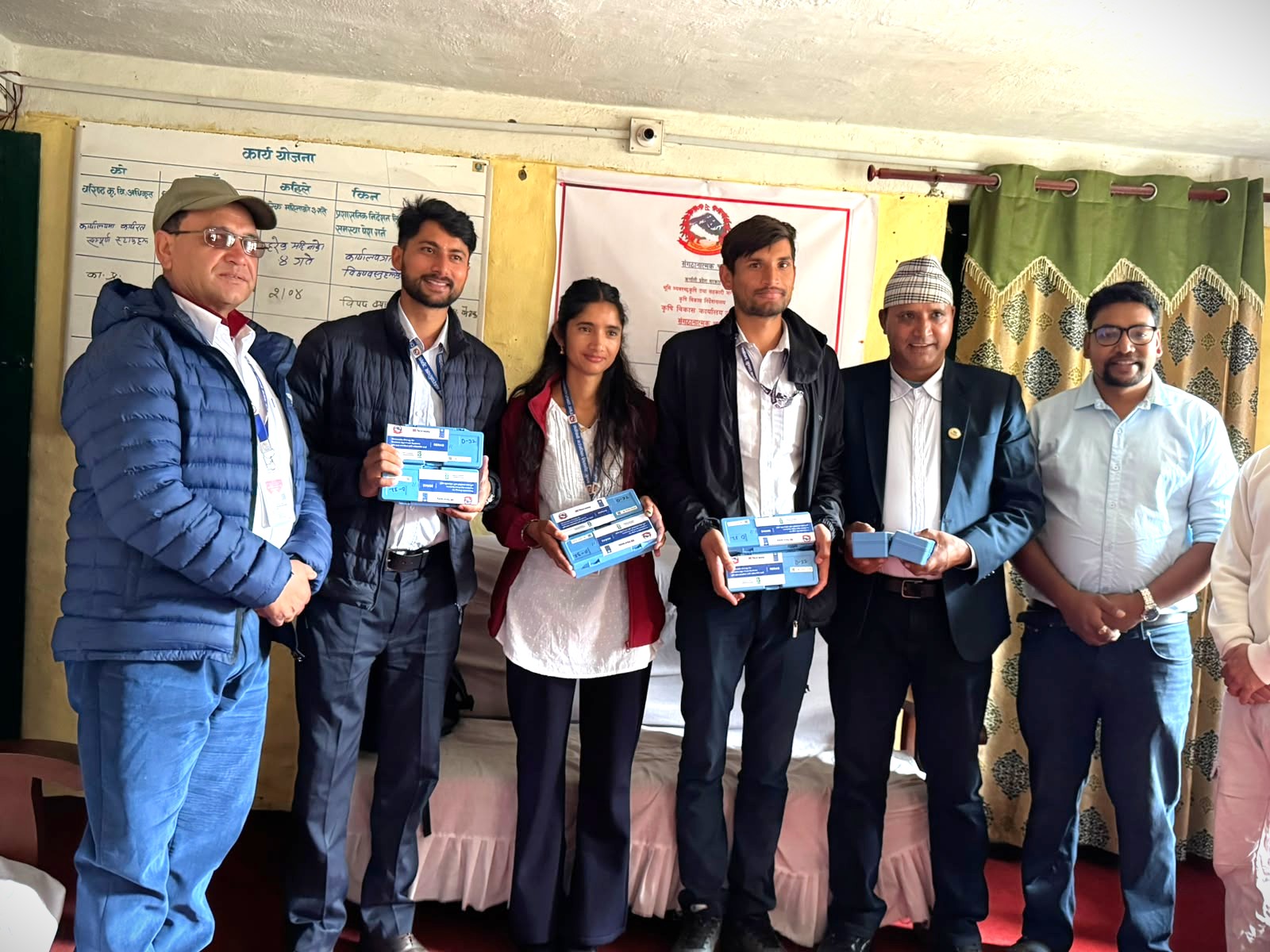
A major part of this effort is promoting Total Soluble Solids (TSS) testing to help farmers determine the appropriate harvesting stage. Refractometers, the instruments used for TSS testing, have been distributed to agriculture technicians in Chandananth, Tatopani, Patarasi Municipalities, and ADO, Jumla.
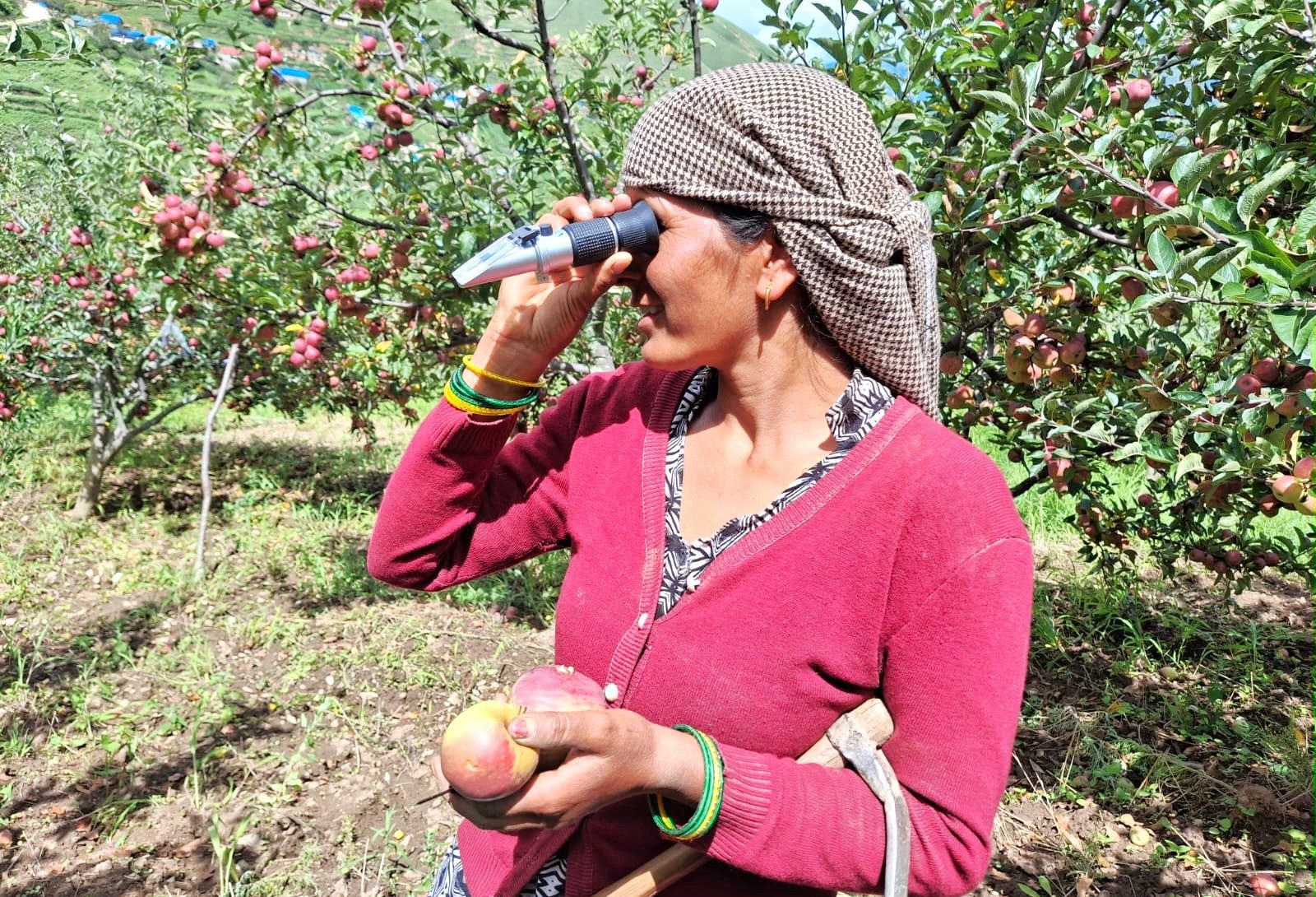
Alongside this, RERAS has been running a sustained series of awareness activities, including radio messaging, Farmer Field Schools (FFS), and on-site orientations to build farmers’ knowledge and skills in apple orchard management. The project is also working closely with value chain actors and other stakeholders to strengthen the broader market system for Jumla apples.
LI-BIRD is implementing the RERAS Project, led by UNDP and with support from the Royal Norwegian Embassy in Kathmandu, and the Embassy of Finland in Kathmandu, across 11 municipalities in Sudurpashchim, Karnali, and Bagmati provinces (four in Karnali, six in Sudurpashchim, and one in Bagmati), in collaboration with local governments and in partnership with the Alternative Energy Promotion Center (AEPC), the International Centre for Integrated Mountain Development (ICIMOD), the World Food Programme (WFP), and other organizations working on sustainable agriculture and food security and nutrition.
Media coverage: https://hamrokarnali.com/?p=4386