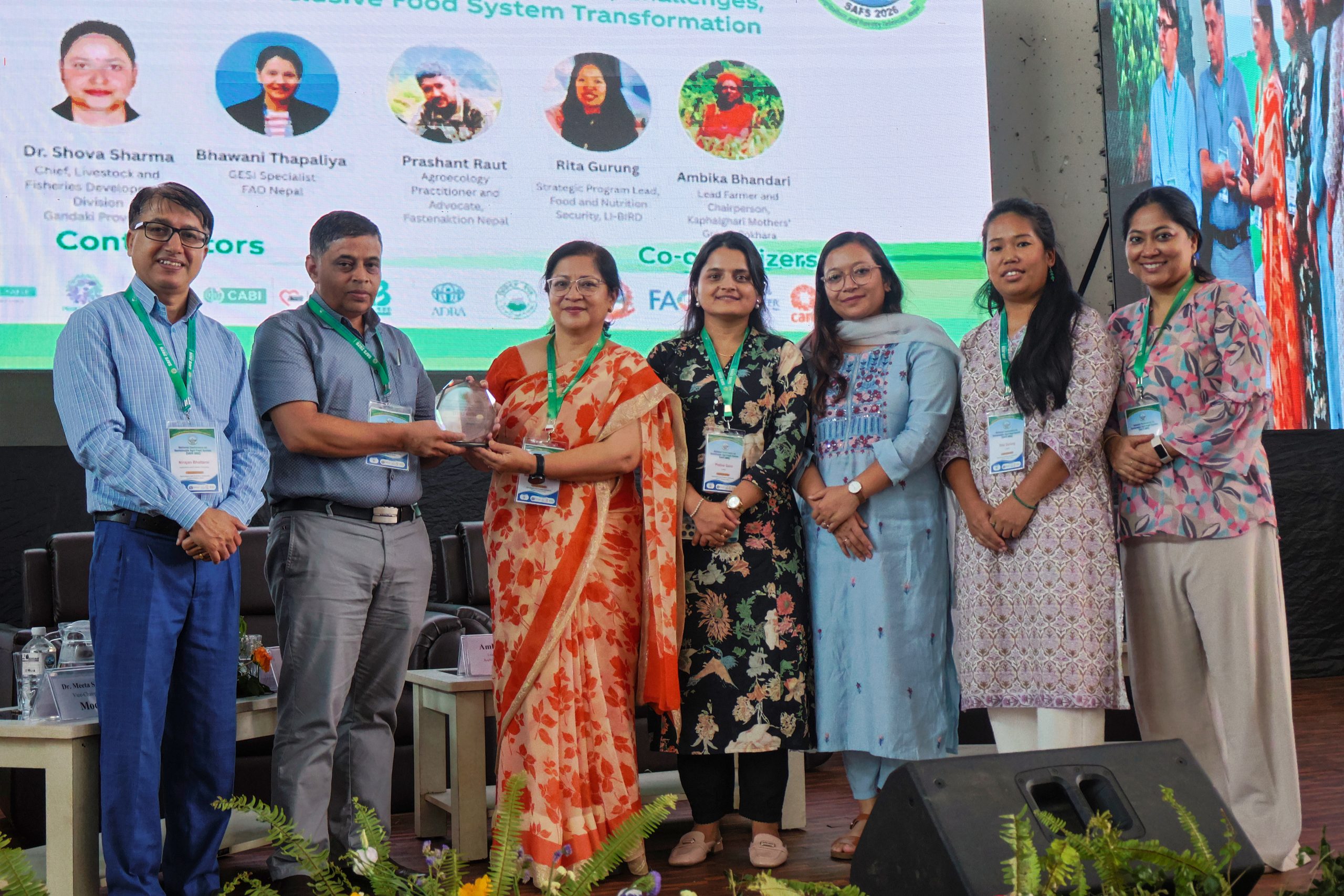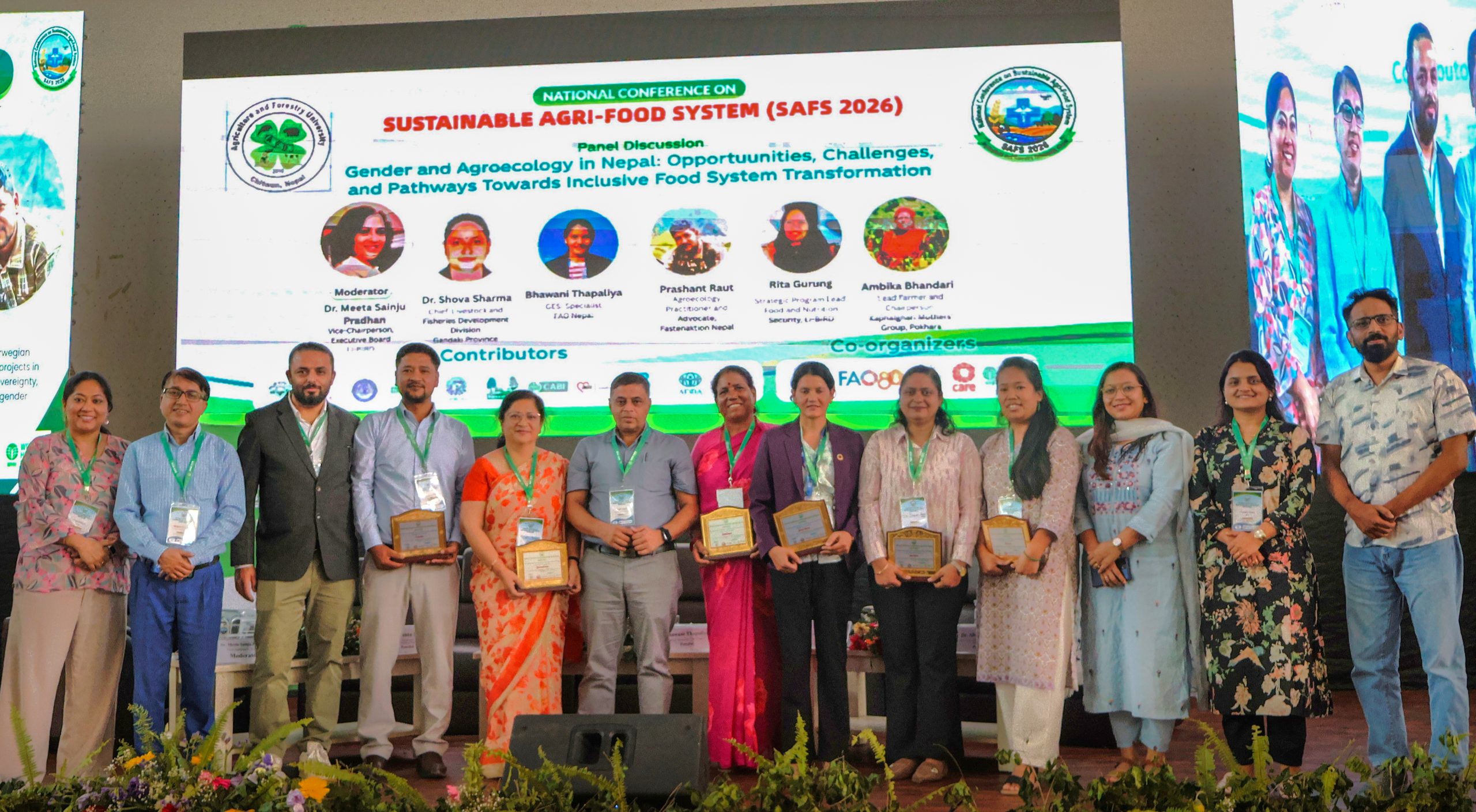
The three-day Sustainable Agri-food System (SAFS 2026) Conference held at the Agriculture and Forestry University (AFU) in Rampur, Chitwan, from June 25 to 27 2026, , was organized by AFU in collaboration with the Ministry of Agriculture and Livestock Development, the Ministry of Forests and Environment, FAO, HEIFER International, and Welthungerhilfe (WHH). LI-BIRD contributed as a key partner, leveraging support from the CRA-III, Green Karnali, and Green Evolution projects. The conference was attended by policymakers, researchers, development practitioners, students, and farmers to discuss sustainable agriculture, agroecology, and inclusive food systems in Nepal. The conference began with an inaugural session attended by distinguished dignitaries from government, academia, and development organizations. The Vice Chancellor of AFU chaired the event, while the Secretary of the Ministry of Agriculture, Forest and Environment served as the Chief Guest. Keynote presentations and discussions highlighted emerging opportunities and challenges in strengthening sustainable and resilient food systems in Nepal.
A unique feature of the first day was the educational drama The Muted Melody, performed by Karmi Chautari in collaboration with ForestAction Nepal. The performance effectively portrayed social and environmental issues through an engaging artistic medium, leaving a lasting impression on participants.
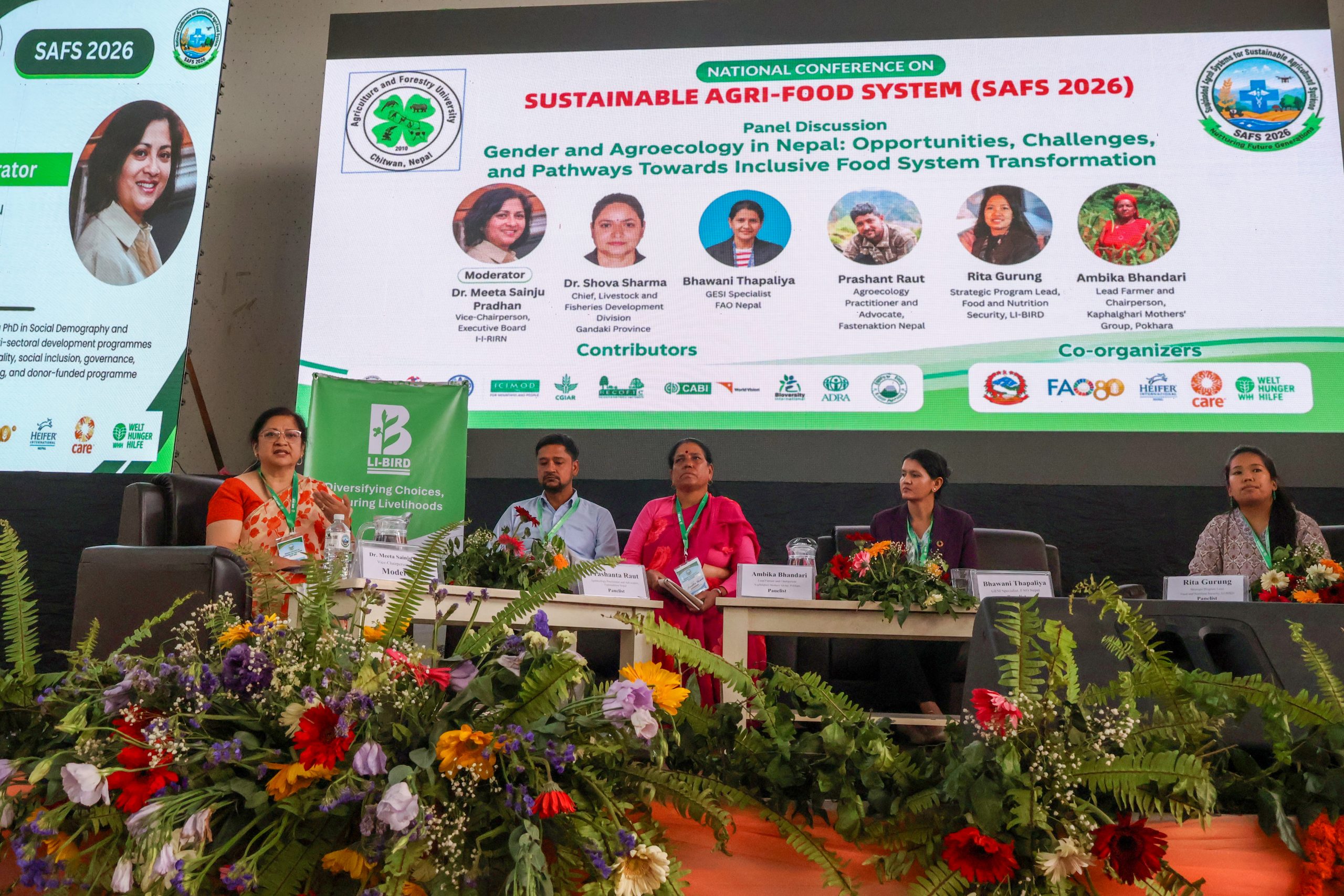
One of the major highlights of the conference was the panel discussion organized by LI-BIRD on the second day, titled: “Gender and Agroecology in Nepal: Opportunities, Challenges and Pathways Towards Inclusive Food System Transformation”
The session was moderated by Dr. Meeta Sainju Pradhan, Vice Chair of LI-BIRD, and featured a distinguished panel comprising:
- Dr. Shova Sharma, Chief, Livestock and Fisheries Development Division, MoLMAC, Gandaki Province
- Ms. Bhawani Thapaliya, GESI Specialist, FAO
- Mr. Prashant Raut, Agroecology Practitioner and Advocate, Fastenaktion Nepal
- Ms. Rita Gurung, Strategic Programme Lead, Food and Nutrition Security, LI-BIRD
- Ms. Ambika Bhandari, Lead Farmer and Chairperson, Kaphalghari Mother’s Group, Pokhara
The discussion explored the critical relationship between gender equality, social inclusion, and agroecological transformation. Panellists emphasized that sustainable food systems cannot be achieved without recognizing and addressing the disproportionate burden carried by women in agriculture and rural households.
Ms. Bhawani Thapaliya highlighted the widespread issue of unpaid care and domestic work performed by women, emphasizing that economic empowerment and the active engagement of men are essential to transforming deeply rooted social norms. She also shared how FAO is promoting climate-smart agricultural technologies to enhance resilience and productivity.
Mr. Prashant Raut stressed the importance of social justice and inclusion within food systems, pointing to inequalities that persist despite agricultural advancements. He underscored the value of indigenous knowledge and participatory approaches, noting that farmers have long integrated scientific principles into their practices through experience and innovation.
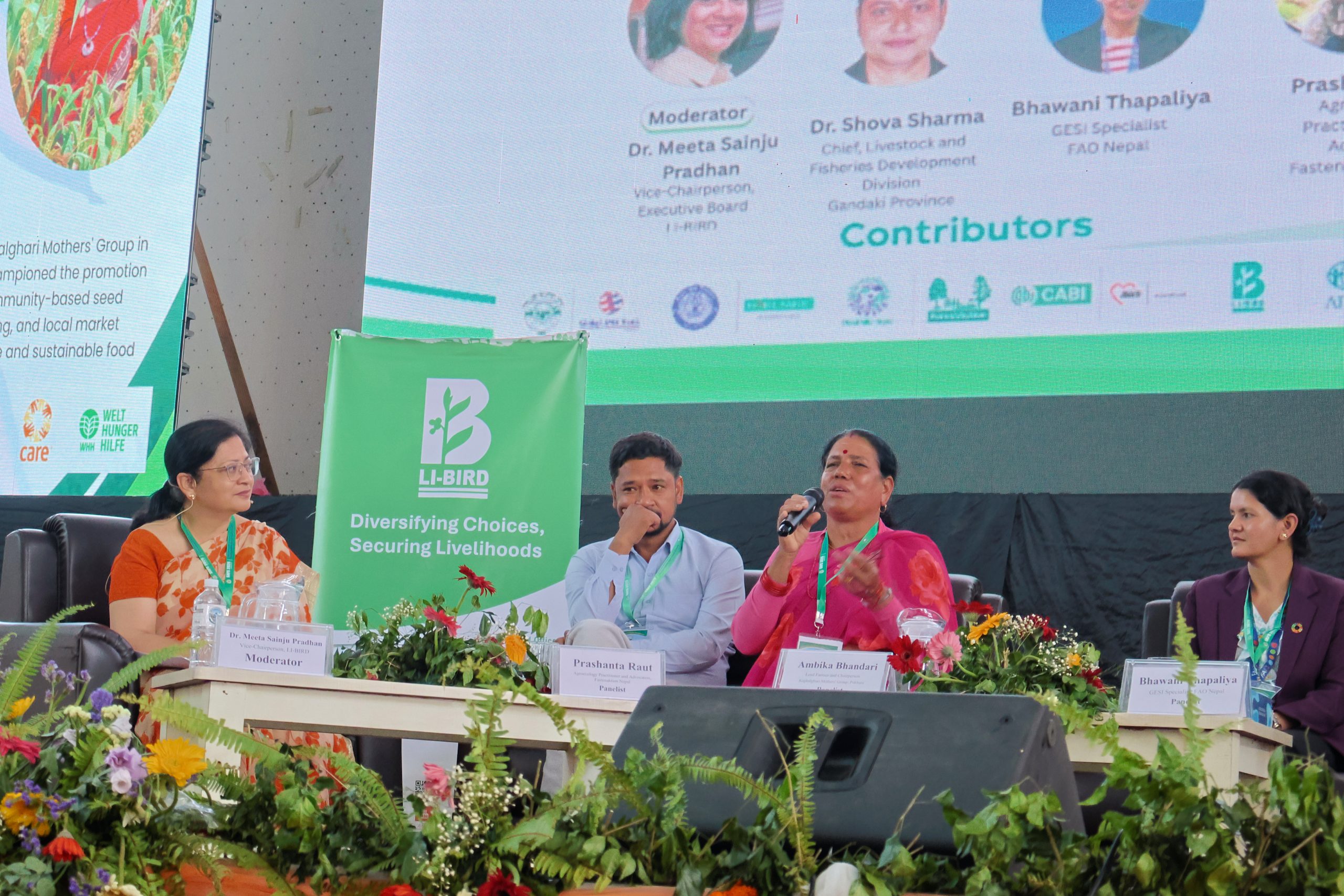
Bringing a farmer’s perspective, Ms. Ambika Bhandari shared inspiring insights on women’s empowerment and leadership in agriculture. She advocated for reducing dependency on pesticides and chemical fertilizers, strengthening women’s participation in decision-making, and expanding women’s access to agricultural machinery and technical skills. She shared that women often manage household finances responsibly and remarked that accessing money from a woman’s purse is often easier and more reliable than taking it from a man’s coat pocket.
Similarly, Ms. Rita Gurung highlighted the positive contributions of home gardening, women-friendly technologies, and local entrepreneurship in strengthening household food security and promoting sustainable livelihoods. She emphasized the importance of preserving local knowledge while creating opportunities for innovation and enterprise development.
Dr. Shova Sharma presented ongoing agroecology initiatives being implemented by MoLMAC and stressed the need for stronger coordination among organizations. She emphasized that collaboration, partnership, and shared commitments are essential to avoid duplication of efforts and achieve meaningful outcomes.
While concluding the panel discussion session, Dr. Meeta Sainju Pradhan provided her reflections on scaling up agroecological practices and promoting inclusive food systems. Discussions highlighted the importance of effective market management, gender-responsive policies, and equitable participation in agricultural development. She emphasized that women’s empowerment has far-reaching impacts on families, communities, and society as a whole. She encouraged stakeholders to address persistent barriers faced by women, including unequal decision-making power, labour burdens, and the effects of migration on rural households. Her remarks echoed the need to prioritize gender equality at the heart of food system transformation.
The final day featured poster presentations, including contributions from LI-BIRD, showcasing ongoing research, innovations, and community-based initiatives that support sustainable agriculture and agroecology.
The SAFS Conference 2026 provided an invaluable platform for learning, networking, and exchanging ideas among diverse stakeholders. The discussions reinforced that achieving sustainable and inclusive food systems requires collaborative action, recognition of local knowledge, gender-responsive approaches, and continued investment in agroecological practices.
The conference offered new perspectives and meaningful opportunities to engage with experts and practitioners working toward a more sustainable agricultural future for Nepal.