
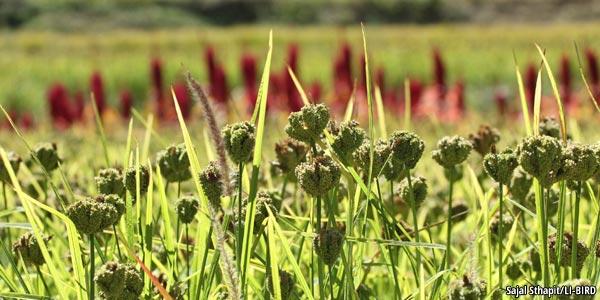
Revalorizing Small Millet in South Asia (RESMISA), regionally led by DHAN Foundation, India, was a research project implemented in Sri Lanka, India, and Nepal with technical support from five Canadian Universities. Considering the significance of small millets as food, nutrition, and medicine, the RESMISA project intended to improve the management and use of small millets and increase their demand by adding value to these crops for food and nutrition, especially for women and children. Specific objectives of the project were:
- on-farm conservation and improvement of small millet varietal diversity
- sustainable agriculture kits distribution and on-farm research
- post-harvest technology and value addition research
- revitalize indigenous knowledge and socio-cultural practices
- enhance the consumption and social status of millet
- public policy analysis and change.
The project carried out the characterization of small millets, including the identification of promising millet varieties using participatory variety trials. To address production-related constraints, the project distributed sustainable agriculture kits and conducted agronomic research. The project also developed options for post-harvest technologies to reduce farmers’ drudgery, especially that of women farmers. Indigenous knowledge associated with small millets was documented, and further research areas were identified. Awareness among farmers on the value of small millets for food and nutrition security was raised. The project also carried out policy studies to advocate for investment in small millet research in the country.
The key achievements of the project include:
- 32 accessions of finger millet, 5 accessions of proso millet, 6 accessions of foxtail millet, 2 accessions of small millet, and 3 accessions of barnyard millet were characterised; some were promising for further on-farm testing and evaluation.
- Sustainable agriculture kits and agronomic trials expected to yield some positive results in production.
- Portable pedal threshing and pearling machines for finger millet were developed by NARC and tested amongst farmers to reduce their workload and increase efficiency. Initial results showed promising results for adoption; however, certain modifications (electric motor operated machine, reduction in size and weight, wheels for easy mobility, bigger intake) were deemed necessary before further testing.
- Indigenous knowledge was documented for further reference.
- Farmers increasingly became aware of the value of finger millet, and some schools have included finger millet porridge as a mid-day meal in their programme.
Project Details
Countries
Nepal
Province
Working district
Dhading, Kaski
Municipality
Duration
Mar 2011 - Aug 2014
Partners
Arthrachayra Foundation, Canadian Mennonite University, DHAN Foundation, McGill University, Tamil Nadu Agriculture University, University of Guelph, University of Manitoba, University of Winnipeg, Watershed Support Service and Activities Network (India)
Funded by
Canadian International Development Agency, DHAN Foundation, International Development Research Centre (IDRC)
Household Coverage
Contact Person
E-mail: info@libird.org