
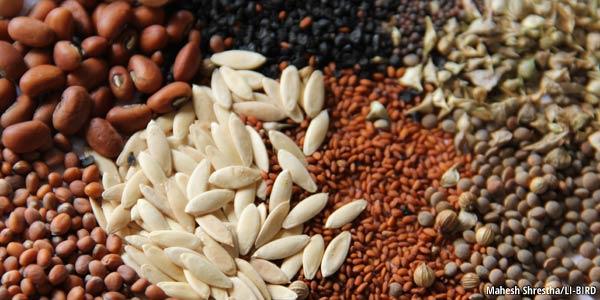
Many smallholder farmers in developing countries, such as Nepal, even in the early 2010s, had limited access to sufficient plant diversity or seeds. This limited their ability to improve their resilience and response capacity to several livelihood problems, including food security.
The international policy framework on plant genetic resources aimed to serve these farmers, but its focus was largely on ex-situ conservation and formal breeding, which appeared to ignore the fundamental issues of availability and use of crop diversity by smallholder farmers.
Smallholder farmers often had distinct needs for a wider range of diversity adapted to their production niches and risk management strategies. The formal seed sector was unable to provide seeds or other planting materials that met these diverse needs. There was an urgent need to reinforce diversified seed production, distribution, and dissemination mechanisms.
Based on the existing needs of the farmers, the project aimed to reduce the vulnerability of small-scale family farmers through enhanced diversification of seed and clonal material production and distribution systems, supported by revised and realigned policies that promoted the availability and adaptive capacity of diverse planting materials in the production system.
Project Details
Countries
Nepal
Province
Working district
Jumla, Kaski, Bara
Municipality
Duration
May 2013- Dec 2016
Partners
Anamolbiu Private Limited, Bioversity International, Nepal Agricultural Research Council
Funded by
Bioversity International, Swiss Agency for Development Cooperation
Household Coverage
Contact Person
E-mail: info@libird.org