
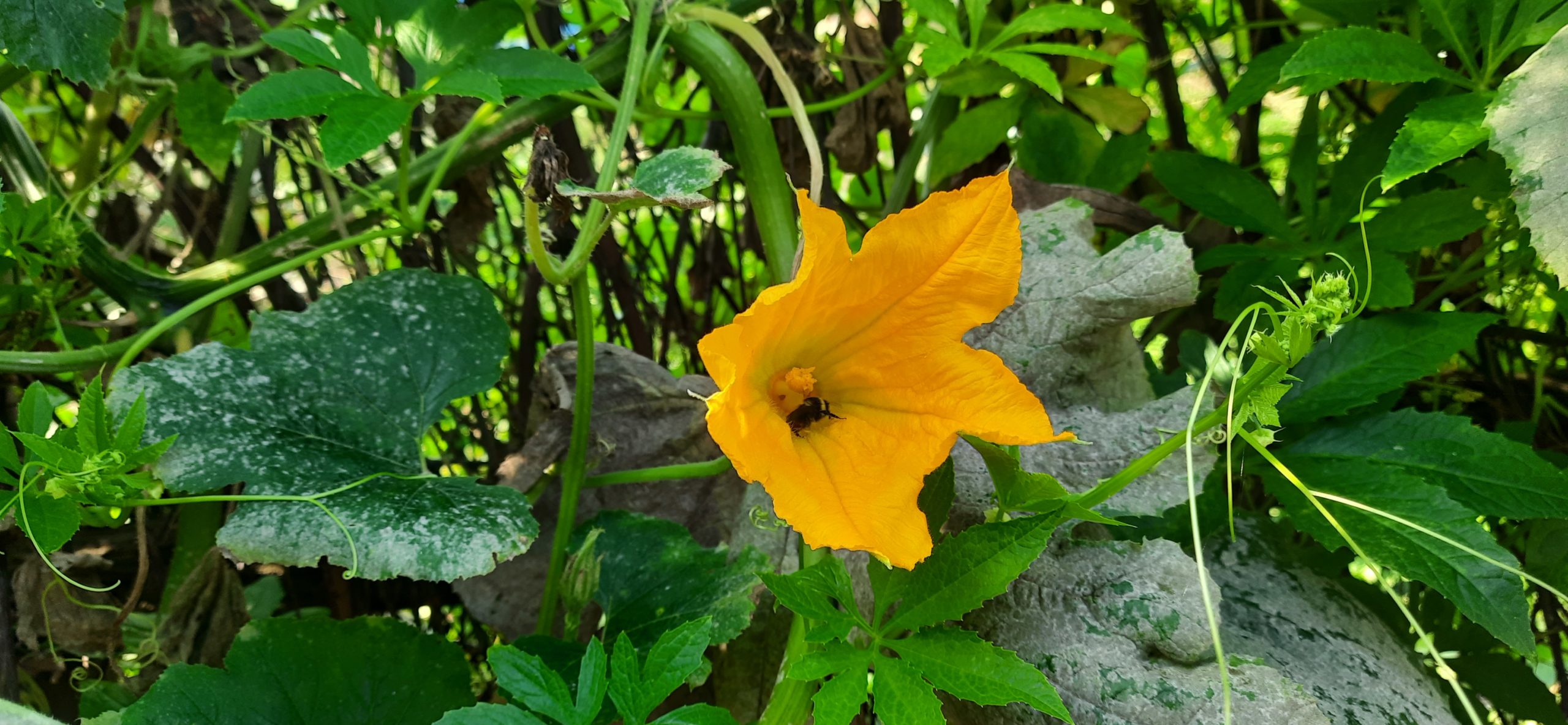
Pollinators’ decline is becoming a global problem and is threatening the human food supplies and ecosystem function, but smallholder farmers are often unaware of this global threat. Indeed, there is a strong political urge from the provincial and national-level governments to promote biodiversity-friendly farming practices to conserve pollinators’ diversity. However, various barriers, including a lack of farmer awareness, capacity, and evidence on pollinator services, prevented the government from translating into solid and functional action plans and policy outputs for farmers on the ground.
The project “Embedding Sustainable Pollination Management into Nepalese Agriculture System” was implemented in Jumla district with the financial support from Darwin Initiatives and in collaboration with HERD International. This project assessed pollinator declines and pollinator-dependent crops in Jumla, raised awareness on pollination, increased the capacity of individuals and institutions to manage pollination services, and facilitated the design of policies, strategy and action plans to conserve and enhance pollinator biodiversity in the Karnali Province of Nepal. This initiative assisted in devising an evidence-based strategy to support pollinators and increase the capacity of the provincial Ministry and other local institutions to conduct research and training in pollination service management. The key achievements of the project (Phase I) are as follows:
- Published and disseminated various knowledge products benefiting more than 100 institutions and individuals, which targeted pollinator awareness. The published documents provide crucial data on pollinators in Nepal and the wider Himalayan region, which include:
- Training manual for Training of Trainers regarding pollinators
- Pollinator awareness video
- Radio jingle
- Leaflet
- Farmer field school manual
- Trained 283 agriculture extension workers, including government extension workers, agriculture teachers & development partner staff from Karnali province to enhance their capacities on pollination management, which includes the importance of pollination and pollinators through 10 pollinator capacity building workshops.
- Integrated the pollination content into their regular basic in-service training syllabus targeting the government agriculture extension workers at Agriculture and Livestock Business Promotion Training Centre (ALBPT), Surkhet.
- Supported the development of a Karnali Pollinator Strategy led by the MoLMAC through a series of meetings and consultations at district, provincial, and federal levels.
- Pollinator abundance and deficits in 8 important crops were identified, and information was planned to be disseminated through the Digital Pollination Library. After the completion of this project, the Darwin Initiative funded the Phase II titled “Upscaling pollination to enhance biodiversity and human welfare in Nepal- Nepal Pollination Project (NPP)” where LI-BIRD, in collaboration with HERDi and AFU have been working since October 2025 in 8 districts from Gandaki, Lumbini, and Karnali Provinces of Nepal.
Project Details
Countries
Nepal
Province
Karnali
Working district
Jumla
Municipality
Patarashi Rural Municipality, Sinja Rural Municipality and Chandannath Municipality
Duration
June 2022 - November 2024
Partners
Department of Biological Science, University of Bristol (Lead partner) | HERD international, Nepal (implementation partner) | Ministry of Land management, Agriculture and Cooperative, Karnali Province (Facilitation partner) | Agriculture and Forestry University, Nepal (facilitation partner) | Central Department of Zoology, Tribhuvan University, Nepal (facilitation partner)
Funded by
Darwin Initiative
Household coverage
10000 farming households