
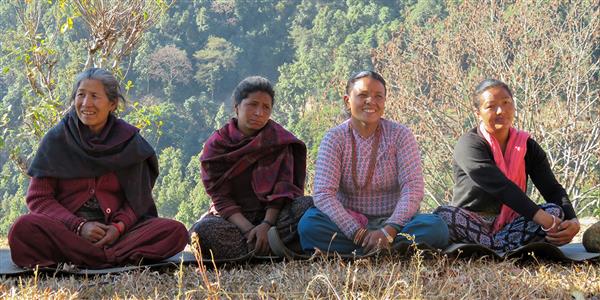
Sindhupalchok, regarded as one of the poorest districts in Nepal, with approximately 45% of the population living below the poverty line, and 52% of the population having food sufficiency for fewer than nine months, was one of the worst-affected districts by the devastating earthquakes of 2015. Even two years after the massive earthquake, people in the district continued to struggle to restore their livelihoods to normal conditions. LI-BIRD designed the Rebuilding Family Farming (RFF) Programme for responding to the 2015 earthquake, which included a phased approach to responding to earthquake-affected community needs:
- livelihood provision,
- livelihood protection, and
- livelihood promotion.
Enhancing Economic and Social Resilience of Earthquake-affected Communities in Sindhupalchok (ESRS) was a project funded by Mercy Relief (Republic of Singapore). The project was designed to build on the outcomes of Phases I and II of the RFF programme in Sindhupalchok district and was in line with the programmatic framework in RFF phase III, i.e., focusing on increasing income, employment, and building resilient livelihoods. ESRS was implemented in Lisankhu-Pakhar Rural Municipality (Wards 2, 3, and 4). The project ran until the end of June 2020, with its impact group consisting of 1,050 households.
ESRS sought to capitalise on and harness the potential for improving the economic and social resilience of the disaster-hit communities in Sindhupalchok. The two expected outcomes of the project were:
earthquake-affected communities increased income and employment opportunities through engagement in agricultural value chains, and
enhanced resilience of disaster risk-prone communities and households by building local capacity to plan and implement CBDRMPs and LDRMPs.
Project Details
Countries
Nepal
Working district
Sindhupalchok
Province | Municipality
Duration
2018 - 2020
Partners
Lisankhu Pakhar Rural Municipality
Funded by
Mercy Relief (Singapore)
Household Coverage
Contact Person
E-mail: info@libird.org